
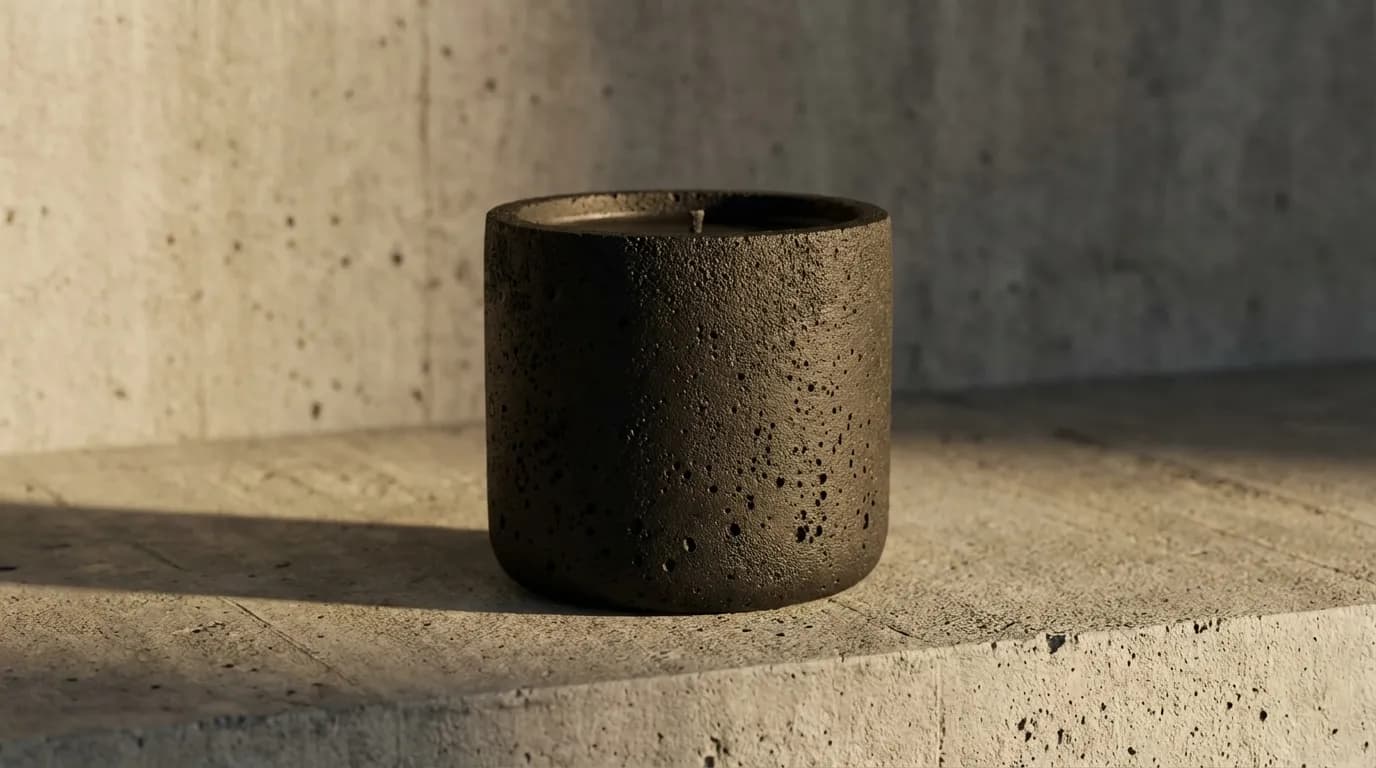
Concrete remembers everything. The grain of the form that shaped it. The air temperature on the day it was poured. The hands, if they were careful. Unlike glass or ceramic, concrete does not pretend to be flawless. It announces its making.
This is exactly why it has become the material of choice for a new generation of candle makers who care as much about what sits on your shelf after the flame goes out as they do about the fragrance while it burns.
A Brief History of Being Overlooked
For most of the twentieth century, concrete lived outside. It built highways and parking structures, brutalist university libraries and Soviet apartment blocks. It was the material of infrastructure, of necessity. Beautiful in the way that a bridge is beautiful, which is to say, only to the people paying attention.
The luxury market ignored it entirely. High-end home goods defaulted to marble, glass, polished metals. Materials that signaled refinement through smoothness, through the erasure of process. Concrete, with its raw texture and visible imperfections, did not fit the brief.
Then something shifted. Architects like Peter Zumthor and Tadao Ando had been building with exposed concrete for decades, treating it not as a budget material but as a canvas. Their buildings proved that concrete could carry emotion, that its roughness was not a flaw but a form of honesty. Slowly, that sensibility migrated from architecture into interior design, from interior design into objects, and from objects into the things we light on fire in our living rooms.
Why Concrete Works for Candles
There is a practical argument and a philosophical one. Both matter.
Practically, concrete is excellent at managing heat. It absorbs warmth gradually and distributes it evenly, which means a concrete vessel does not develop the hot spots that thin glass does. It will not crack from thermal stress. It will not warp. When the candle has burned through its last hour, the vessel remains exactly as it was on day one.
Weight is another factor. A concrete candle vessel has heft. You feel it when you pick it up. In a market saturated with products that feel disposable, weight communicates permanence. It tells your hands, before your eyes or nose register anything, that this object was made to stay.
Philosophically, concrete is the anti-commodity material. Every pour is slightly different. Microscopic air bubbles create textures that are never repeated. The surface may have subtle variations in shade, tiny mineral deposits that catch light differently depending on the angle. These are not defects. They are the fingerprints of a manufacturing process that has not been fully automated, and that is precisely the point.
The Afterlife of a Vessel
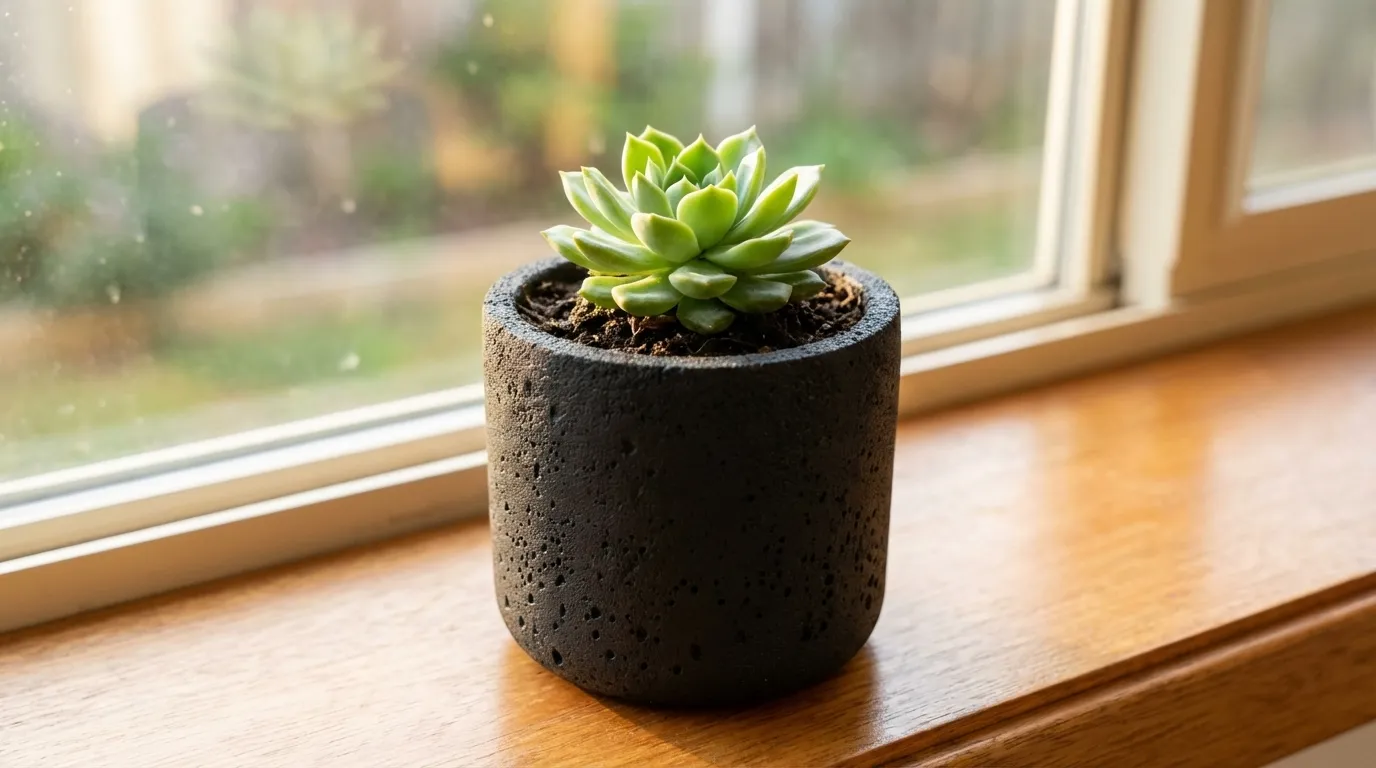
Here is where concrete separates itself from every other candle container on the market: it has a genuine second life. A spent glass jar becomes recycling or, more often, landfill. A concrete vessel becomes a planter, a pencil holder, a small sculpture on a shelf.
The best concrete vessels are designed with this transition in mind. The proportions work empty. The surface is interesting enough to justify its presence without a flame. This is a design philosophy that treats the candle as chapter one, not the whole story.
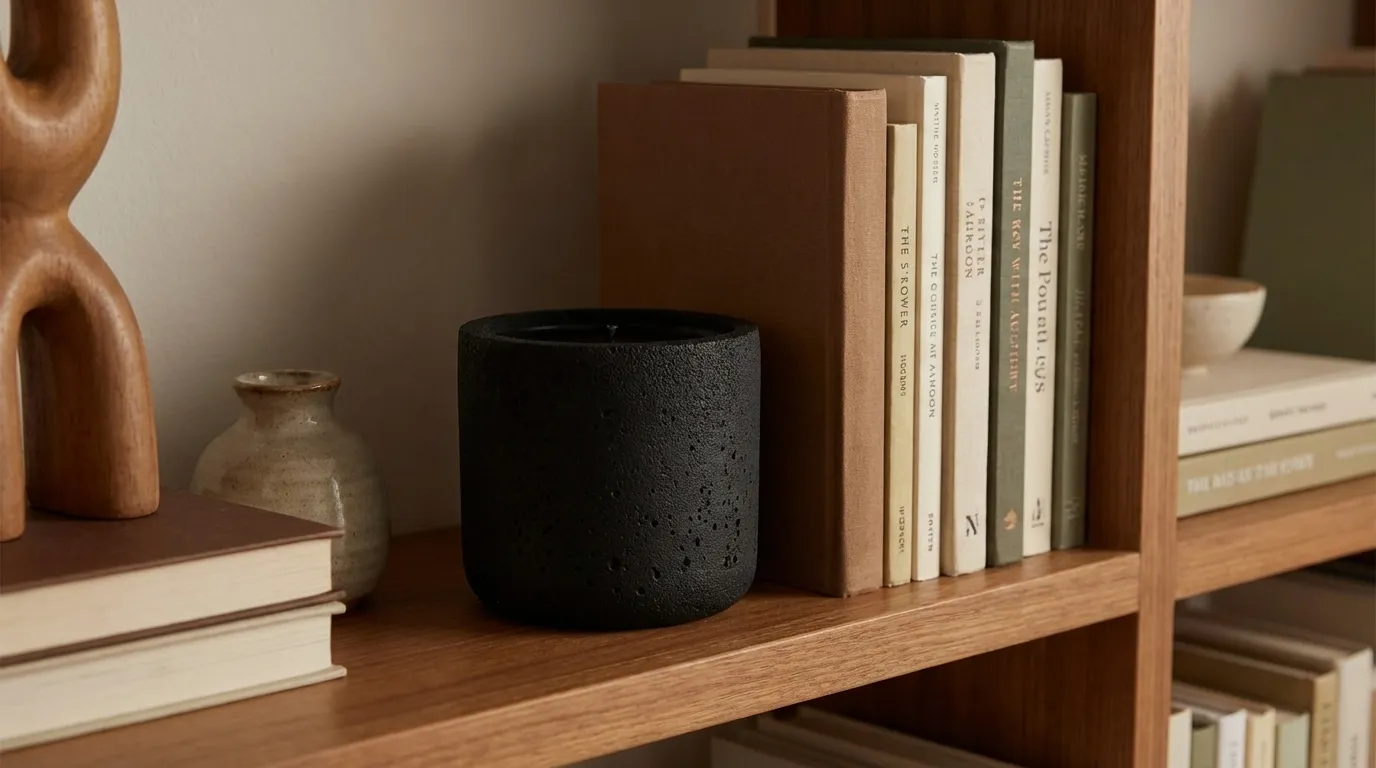
Some people fill their spent vessels with small succulents. Others use them as catch-alls for keys and coins near the front door. A few simply leave them empty on a bookshelf, where their matte surfaces and geometric forms do quiet architectural work among the spines of books.
01 Andromeda is cast in concrete for exactly this reason. The wax runs about forty hours. The vessel does not run out at all. What the vessel becomes once the wax is gone is covered in repurposing a candle vessel.
The Brutalist Connection
The word "brutalist" comes from the French beton brut, meaning raw concrete. It was never meant to imply brutality. It described a commitment to showing materials as they are, without veneer or apology.
That same commitment drives the best concrete candle vessels. They do not hide behind glaze or paint. The concrete is the design. Its color, its texture, its weight. Everything you need to know about the object is communicated through the material itself.
This resonates with a broader cultural shift toward authenticity in home goods. People are tired of objects that pretend to be something they are not: plastic masquerading as wood, MDF dressed up as marble, polyester posing as linen. Concrete cannot pretend. It is what it is, and in a world overstuffed with imitation, that honesty has become a luxury.
Pairing Concrete with Your Space
Concrete vessels work best in spaces that already have some visual warmth. Against a white oak table, the grey-black surface of a concrete candle creates a conversation between hard and soft, industrial and organic. On a marble countertop, the contrast in texture is subtle but present, smooth against rough, polished against raw.
They pair poorly with clutter. Concrete asks for breathing room. A single concrete vessel on a cleared surface says more than a dozen candles crowded together ever could. This is a material that rewards restraint.
Color-wise, the dark tones of concrete complement muted palettes beautifully: terracotta, sage, cream, charcoal. They anchor a room the way a bass note anchors a chord, felt more than noticed, essential to the overall composition.
Not All Concrete Is Equal
Mass-produced concrete goods often use a thin cement coating over cheaper substrates. The result looks like concrete in photographs but feels hollow in person. Quality concrete vessels are solid through, dense and heavy. You should be able to feel the difference in your palm within a second of picking one up.
The mix matters too. The ratio of cement to aggregate, the type of sand used, whether pigment was added to the mix or only to the surface. These details determine how the vessel ages, whether it develops character over years or simply deteriorates.
When choosing a concrete candle, hold it. That is the only test you need. If it feels like a commitment, like something you would not throw away, it was made correctly.
Lyra's Andromeda candle is hand-poured in California and housed in a solid black concrete vessel designed to be kept long after the last flame. Find it at lyracalifornia.com.