
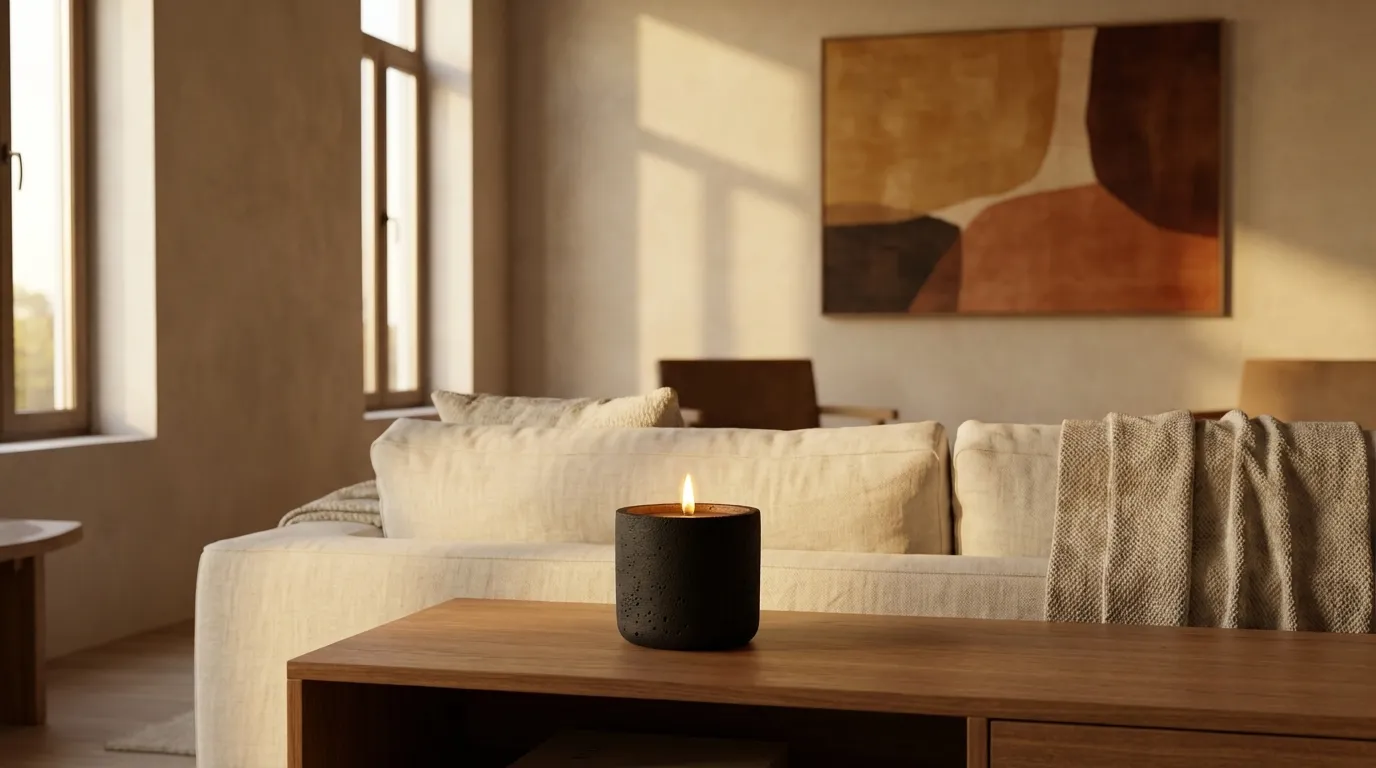
You walk into a hotel lobby and immediately feel at ease. The lighting helps. The furniture helps. But the thing doing the heaviest lifting is invisible. The scent was chosen before the sofas were.
Fragrance is the first thing you register when you enter a space and the last thing you forget when you leave. It works below the threshold of conscious attention, shaping your emotional response to a room before you have formed a single thought about the paint color or the throw pillows. Interior designers have known this for decades. The rest of us are just catching up.
The Neuroscience, Briefly
Smell is the only sense that bypasses the thalamus and connects directly to the limbic system, the region of the brain responsible for emotion and memory. Every other sense, sight, sound, taste, touch, gets filtered and processed before it reaches the parts of your brain that feel things. Smell does not wait.
This is why a fragrance can change the feeling of a room faster than any other design intervention. You can repaint a wall in a weekend and the room will look different. Light a candle with the right scent profile and the room will feel different in about ninety seconds. The first is a visual change. The second is an emotional one.
How Professionals Use Scent
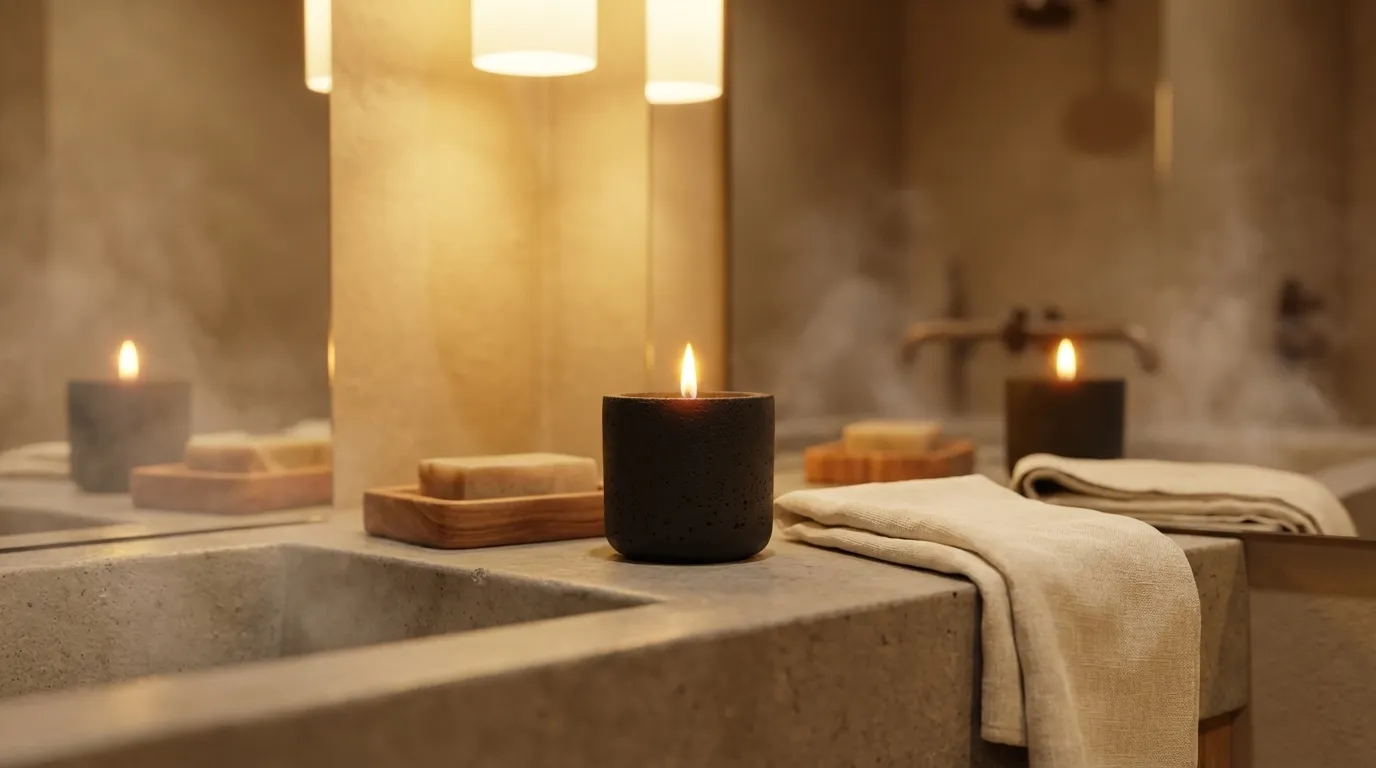
The hospitality industry has invested heavily in what they call "scent branding." High-end hotels develop proprietary fragrances for their lobbies and corridors, scents designed to create a specific emotional tone the moment a guest crosses the threshold.
The fragrances are never accidental. Citrus notes in the lobby because they signal energy and arrival. Deeper notes, amber, wood, leather, in the bar because they signal intimacy and permission to settle. Fresh linen scents in the rooms because they signal cleanliness and comfort. Every fragrance decision maps to a feeling the space is trying to produce.
Restaurants use the same logic. A fine dining room might diffuse something warm and resinous at the host stand, building anticipation before you are seated. A casual brunch spot might lean toward green and herbal notes, signaling openness and ease.
What these industries understand, and what most homeowners do not yet act on, is that fragrance is not decoration. It is atmosphere itself.
Matching Scent to Space
Not every fragrance works in every room. This seems obvious, but the candle market treats it as though one scent should serve your entire home. It should not.
Living rooms benefit from balanced, complex fragrances. These are the rooms where you both relax and entertain, where the scent needs to feel welcoming without demanding attention. Look for mid-weight profiles: warm woods, soft spices, a touch of smoke. Something that occupies the background without receding entirely.
Bedrooms call for gentler, more grounding notes. Lavender gets all the credit here, and it deserves some of it, but sandalwood, vanilla, and muted florals like jasmine work equally well. The key is a scent that signals slowness. Nothing sharp, nothing stimulating.
Kitchens and dining spaces reward freshness. Citrus, herb-forward blends, and green notes cut through the ambient smells of cooking and create a sense of cleanliness without competing with food. Burn these before a meal, not during it.
Bathrooms are where people tend to go too strong. The instinct is to overpower. Resist it. A single, well-chosen candle with a moderate scent throw will do more for a bathroom than three reed diffusers fighting each other.
Workspaces benefit from clarity. Eucalyptus, peppermint, and rosemary have measurable effects on focus and alertness. Keep the scent light and the notes sharp.
01 Andromeda was composed for rooms kept dark and quiet, which is a narrower brief than most candles are given. The argument for owning one candle rather than six is set out in minimalist home fragrance.
The Mistake Most People Make
The most common fragrance mistake in homes is not choosing the wrong scent. It is choosing too many. Three different candles in three rooms, a reed diffuser in the hallway, a plug-in in the bathroom, and suddenly your home smells like a department store fragrance counter. The scents collide, cancel each other out, or merge into an unidentifiable fog.
Restraint is the answer. One scent per floor. Two at most if the rooms are well-separated and the doors stay closed. The goal is not to perfume every square foot. It is to give each space a single, coherent olfactory identity that you notice when you enter and forget once you have settled in.
The best home fragrance is the kind your guests comment on without being able to pinpoint. "Something smells good in here." That is the mark of a well-scented room.
Seasons and Scent
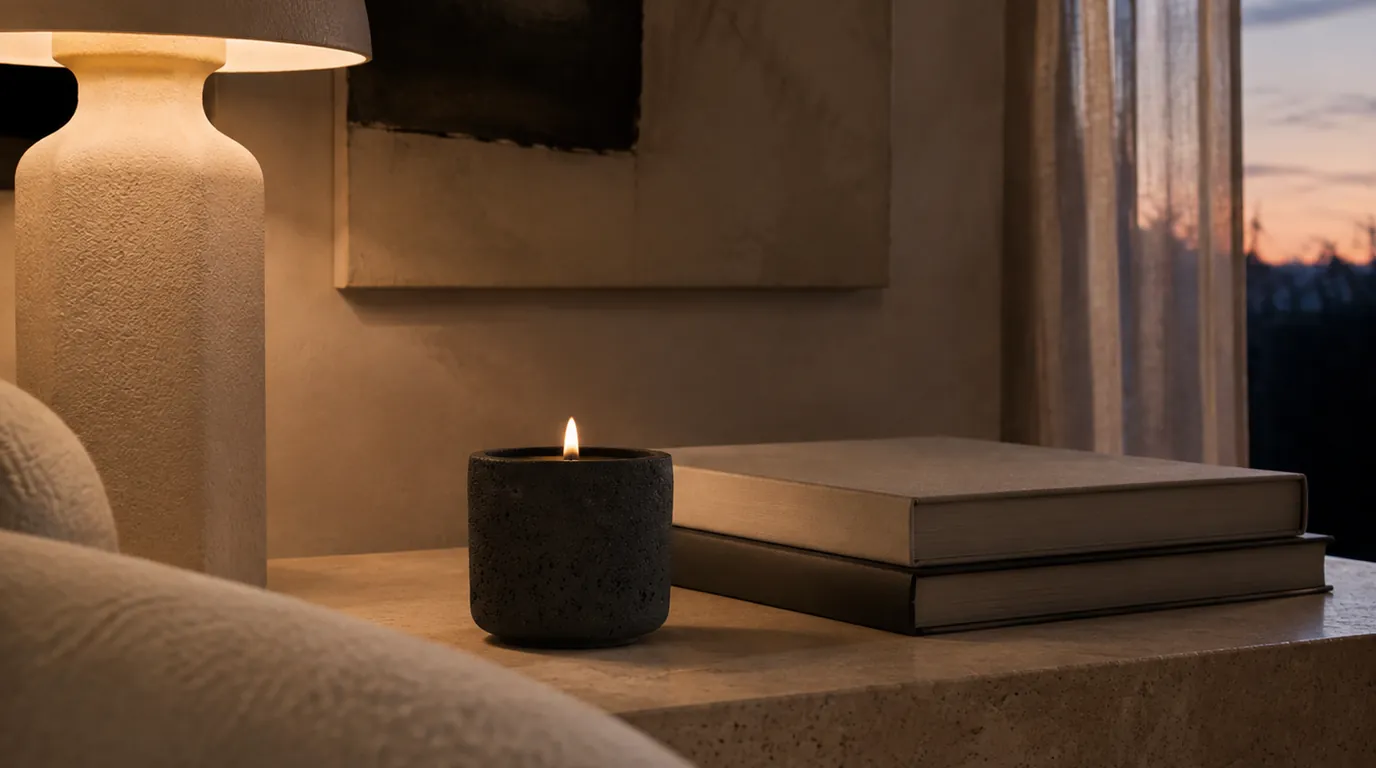
Your home should not smell the same in February as it does in July. This is not about following trends. It is about alignment. The human nose responds differently to temperature and humidity, and fragrances behave differently in warm versus cool air.
In colder months, heavier base notes carry better. Smoke, amber, oud, dark resins. The low humidity helps these scents linger without becoming cloying.
In warmer months, lighter top notes have more presence. Citrus, sea salt, green tea, light florals. High humidity amplifies fragrance, so less intensity produces more effect.
The transition seasons are for the middle register. Black pepper, cardamom, cedar, soft leather. Scents that feel neither heavy nor fleeting.
Size Matters
A small candle in a large room will not do much. A large candle in a small room will overwhelm. This is a geometry problem, not a quality problem.
For a standard living room, a candle in the 6 to 8 ounce range with a moderate scent throw is usually right. For a bedroom, 4 to 6 ounces. For a bathroom, even less.
The other variable is placement. A candle in the center of a room distributes scent evenly but slowly. A candle near an air current, by a doorway or vent, distributes faster but less evenly. Near a wall, the scent pools and intensifies. Experiment with position before deciding a candle is too strong or too weak.
The Room You Did Not Know You Were Designing
Every decision you make about a room, the color, the light, the furniture, the art, shapes how people see the space. Fragrance shapes how they feel in it. One is visual. The other is visceral. And the visceral one wins almost every time.
The next time you light a candle, pay attention. Not just to the scent, but to the shift. The way the air changes. The way the room draws you in a little further. That is not ambiance. That is design, working at a frequency most people never bother to tune.
Lyra's 01 Andromeda was designed to transform a room, not just scent it. Citrus, black pepper, smoke, and sandalwood in a vessel built for the spaces that matter. Explore it at lyracalifornia.com.