
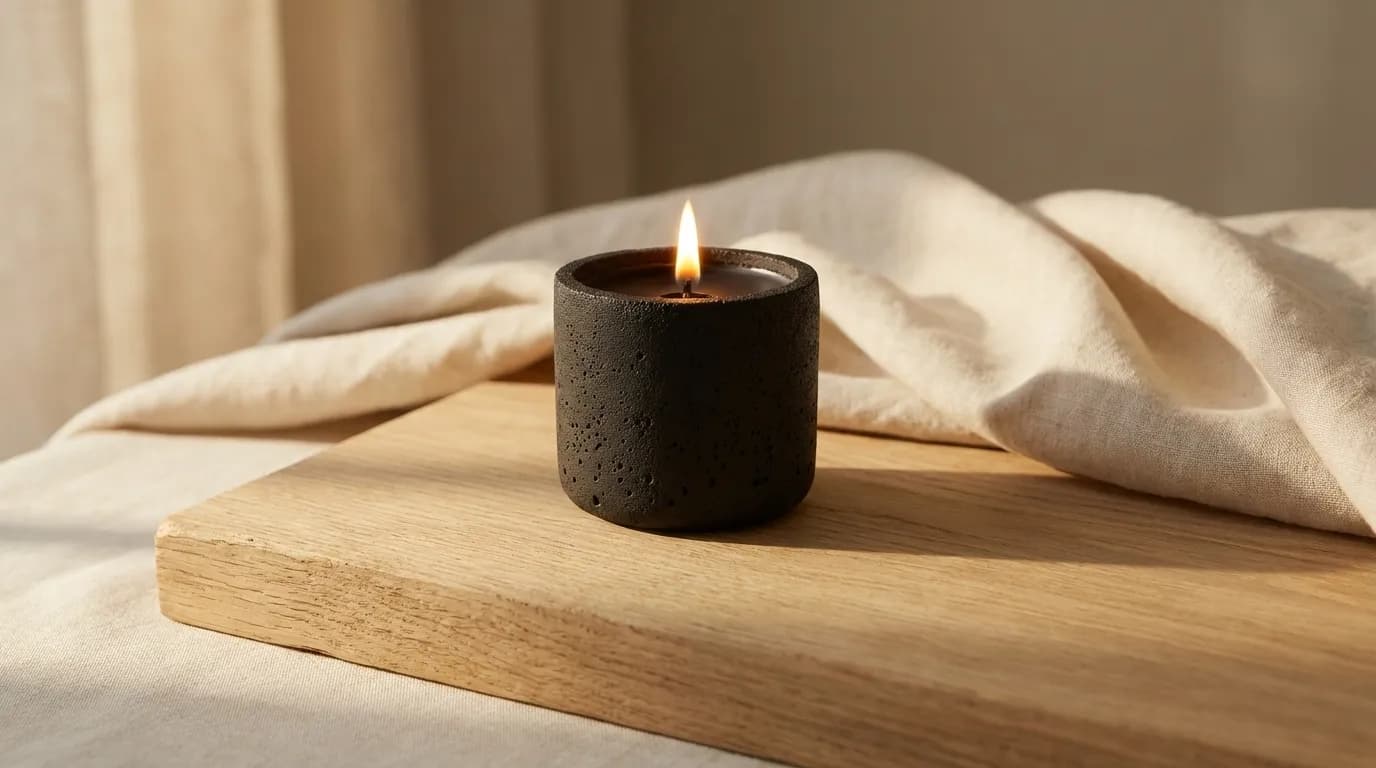
There is something quietly defiant about a black candle. It refuses the familiar warmth of ivory, the safe neutrality of white. Instead, it sits on your shelf like a small piece of night, waiting.
For most of the candle industry's history, color has been decorative. Blush for spring tablescapes. Red for the holidays. White for everything in between. Black was reserved for Halloween displays and Gothic novelty shops, treated as a mood rather than a material choice. That era is over. The black candle has arrived in the living rooms of people who take their spaces seriously, and it is not going anywhere.
The Color of Restraint
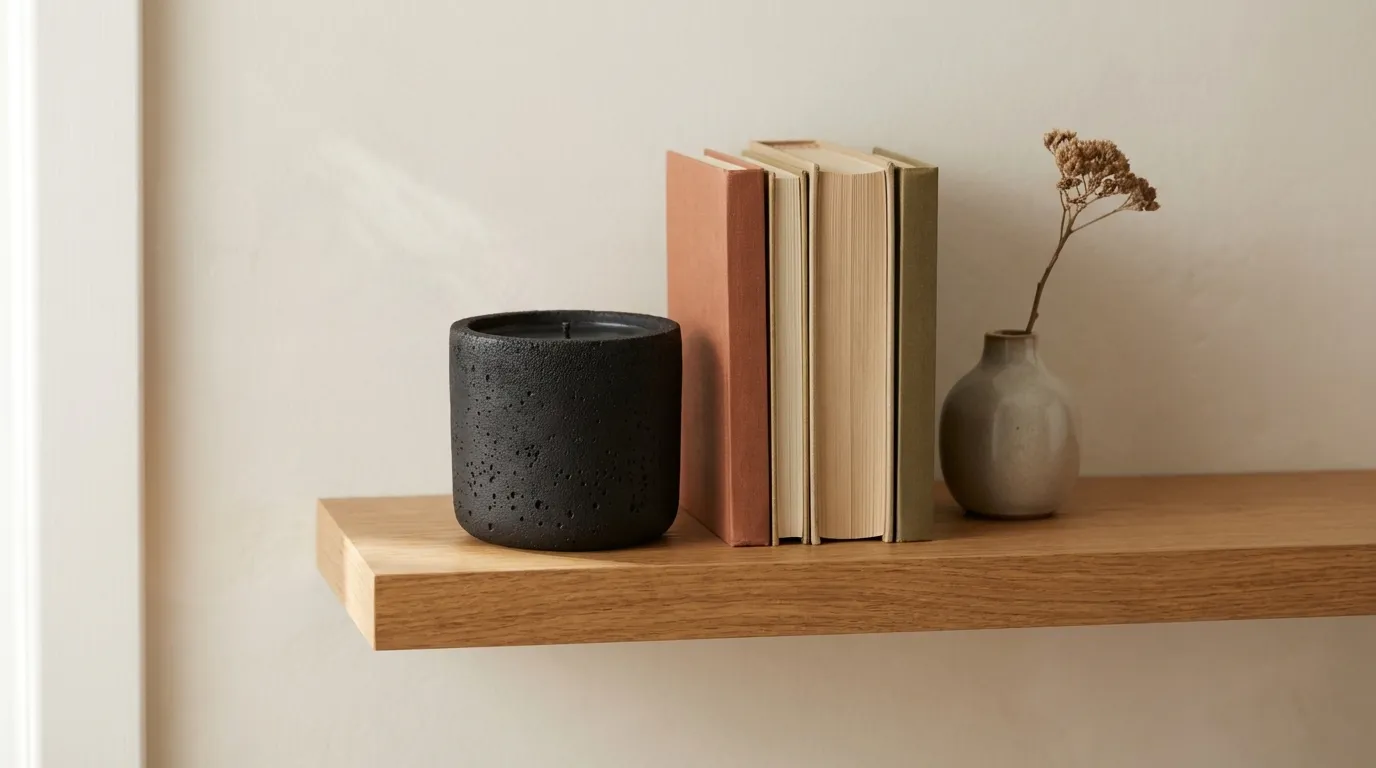
In design, black is not the absence of something. It is the presence of intention. Architects have understood this for decades. Mies van der Rohe built entire philosophies around dark steel and shadow. Tadao Ando poured concrete in shades that absorbed light rather than reflecting it. The Japanese concept of wabi-sabi treats darkness as essential to beauty, not opposed to it.
A black candle operates on this same principle. Where a white candle disappears into a bright room, a black one holds its ground. It becomes an anchor point, a visual rest for the eye. Interior designers have started using them as what they call "negative space objects," pieces that create stillness on a shelf or console precisely because they absorb rather than broadcast.
Why Now?
The timing is not accidental. Several currents in design culture have converged to make the black candle feel not just acceptable, but necessary.
First, the minimalism of the 2010s matured. What began as stark white rooms and Scandinavian restraint has evolved into something richer. Designers now speak of "warm minimalism" and "quiet luxury," approaches that value texture, weight, and depth over emptiness. Black objects fit this vocabulary perfectly. They add substance without adding noise.
Second, the home fragrance market grew up. During the years people spent more time indoors, candles became genuine design objects rather than afterthoughts. The vessel mattered as much as the scent. Consumers started asking questions they never asked before: what is this made of, where was it poured, and does it belong in my home visually as well as aromatically?
Third, material culture shifted. Concrete, blackened steel, dark ceramics, matte finishes. The objects people gravitate toward in 2026 share a common thread: they feel made, weighted, real. A black candle in a concrete vessel speaks this language fluently.
The Science of Black Wax
Beyond aesthetics, there is something worth understanding about how black candles behave. Black soy wax, when properly formulated, burns clean. The color comes from dye integrated during the wax's liquid state, distributed evenly so the burn remains consistent from first light to last.
Soot is the concern most people raise, and it is a fair one. But soot is a function of wick size, wax quality, and burn habits, not color. A well-made black candle with a properly trimmed cotton wick produces no more soot than its white counterpart. The difference is purely visual. And that visual difference is the entire point.
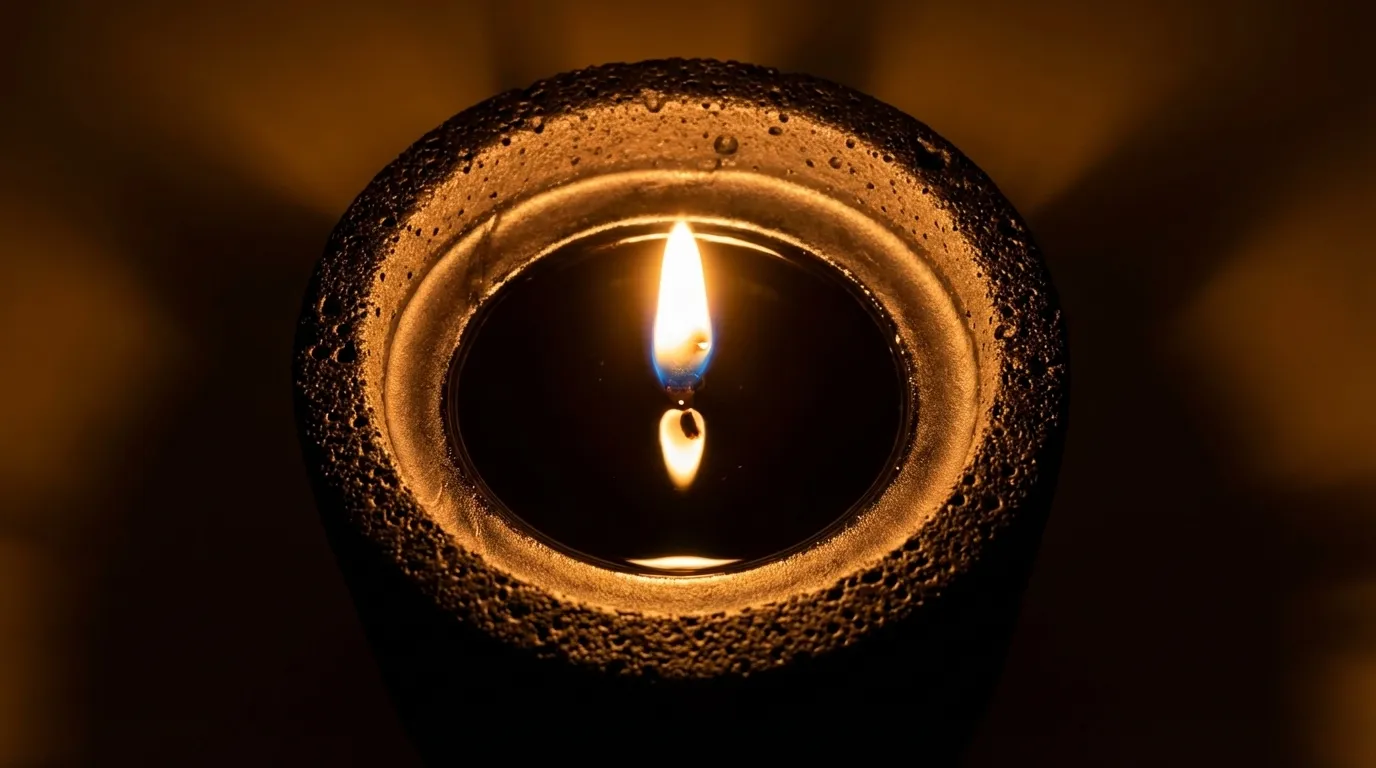
When a black candle burns, the melt pool becomes a small obsidian lake. The flame reflects off dark wax in a way it cannot against white. There is more contrast, more drama, more of what lighting designers call "focal warmth." Light that pulls your attention rather than washing over you.
How Designers Are Using Them
Walk through any design-forward home shop in Los Angeles, Copenhagen, or Tokyo and you will find black candles positioned not as accents but as centerpieces. On a raw oak dining table, three black candles of varying heights create a composition that would take a white candle and a ceramic vase and a stack of books to achieve. The black candle does the work alone.
Stylists for publications like Cereal and Kinfolk have been placing them in editorial shoots for the past two years, often as the single manufactured object in a frame full of natural materials. The reason is simple: black reads as honest on camera. It does not compete with the grain of wood or the texture of linen. It coexists.
In hospitality, boutique hotels have adopted black candles in lobbies and suites as a signal of curatorial confidence. The Ace Hotel group, Aesop retail spaces, and a growing number of independent restaurants use them to set tone without saying a word.
01 Andromeda is black wax in a black concrete vessel, which is a harder thing to get right than black wax in clear glass, because nothing in the object provides contrast. The rooms it was designed for are described in black interiors.
Choosing Well
Not all black candles are equal. The market has noticed the trend, which means there is now a flood of cheaply dyed paraffin candles dressed up in dark packaging. Here is what separates a considered choice from a quick purchase.
The wax matters. Soy or coconut blends burn cleaner and longer than paraffin. They hold fragrance differently too, releasing scent gradually rather than in a synthetic burst.
The vessel matters more. A black candle in a thin glass jar is still a commodity. A black candle in a material that has its own presence, concrete, ceramic, hand-blown glass, becomes an object that outlives the wax.
The scent should match the mood. Black candles pair naturally with deeper fragrance profiles. Think smoke, amber, sandalwood, black pepper. These are not sweet candles. They are evening candles. They belong to the hours when the lights are low and the room finally belongs to you.
A Small Shift, a Real One
The black candle moment is not a trend in the disposable sense. It is a correction. For too long, home fragrance defaulted to the inoffensive: pale colors, floral scents, packaging designed to blend in. The black candle is a choice to stand out through subtraction. Less color, more presence. Less decoration, more weight.
It is, in its own quiet way, a design philosophy you can hold in your hand.
Lyra's 01 Andromeda is a black soy candle poured in California, housed in a concrete vessel built to outlast the wax. Discover it at lyracalifornia.com.