
If you have spent more than ten minutes researching candles online, you have encountered the soy-versus-paraffin debate. It is the candle world's version of butter versus margarine, organic versus conventional, vinyl versus digital. Everybody has an opinion. Not all of them are grounded in reality.
Here is what actually matters, stripped of marketing spin and internet mythology.
What Each One Is
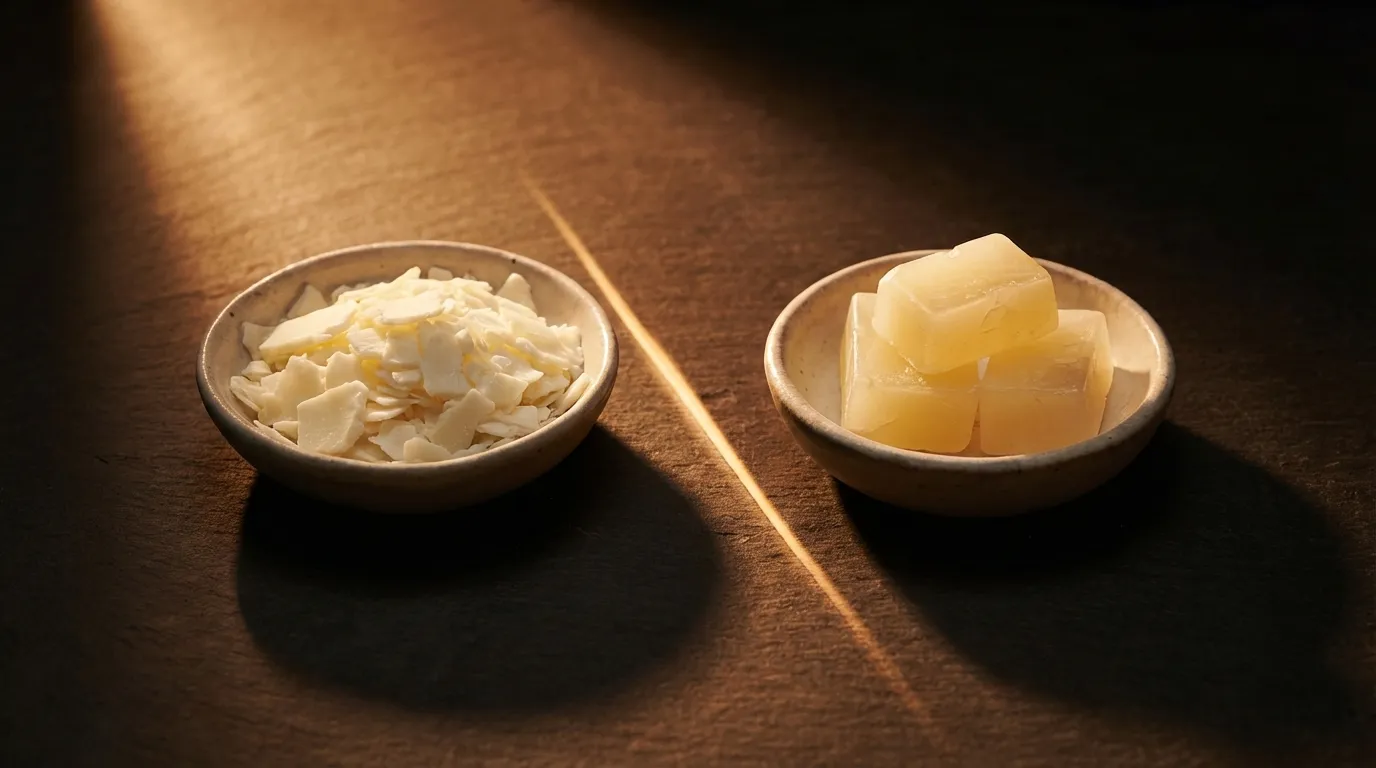
Paraffin wax is a byproduct of petroleum refining. When crude oil is processed into gasoline and other fuels, a waxy residue remains. That residue is cleaned, bleached, and sold as candle wax. It has been the industry standard for over a century.
Soy wax is made from soybean oil. The oil is hydrogenated, a process that converts the liquid fat into a solid at room temperature. It entered the candle market in the early 1990s and has been gaining ground ever since.
Both will hold a wick. Both will burn. Both will carry fragrance. The differences are in the details, and the details matter more than the broad strokes suggest.
Burn Characteristics

Soy wax burns at a lower temperature than paraffin. This has two practical consequences. First, soy candles burn slower, which means more hours per ounce of wax. A six-ounce soy candle will typically outlast a six-ounce paraffin candle by fifteen to twenty percent.
Second, the lower burn temperature means less soot. Soot is the product of incomplete combustion, and cooler, slower burning produces less of it. This does not mean soy candles produce zero soot. A poorly trimmed wick on a soy candle will still smoke. But under identical conditions, soy generates less particulate matter than paraffin.
Paraffin burns hotter and brighter. Some candle makers prefer it for exactly this reason: the hotter flame produces a stronger scent throw, pushing fragrance into the room more aggressively. If you want a candle that fills a large space quickly, paraffin has an edge.
Soy's scent throw is subtler. The fragrance builds gradually, revealing itself layer by layer rather than hitting you all at once. Whether this is an advantage or a drawback depends entirely on your preference. If you think of fragrance as something to be immersed in slowly, soy is ideal. If you want a room to smell transformed the moment you strike the match, paraffin delivers faster.
Health and Air Quality
This is where the conversation gets charged. The internet is full of claims that paraffin candles are toxic. The paraffin industry responds that their product is safe. Both sides overstate their case.
Paraffin candles do release more volatile organic compounds than soy candles. Studies have detected formaldehyde, toluene, and benzene in the emissions from burning paraffin. However, the concentrations are typically low, well below the thresholds that regulatory bodies consider dangerous for intermittent exposure.
The issue is cumulative. A person who burns a paraffin candle once a week in a well-ventilated room is probably fine. A person who burns one every evening in a small, closed bedroom is experiencing a different level of exposure. The dose makes the poison, and the dose is determined by frequency, duration, room size, and ventilation.
Soy candles produce fewer of these compounds. They are not emission-free. Combustion of any organic material releases some byproducts. But the chemistry of plant-based wax produces fewer of the specific compounds that raise concerns.
The honest summary: paraffin is not poison, and soy is not medicine. But soy is measurably cleaner in terms of what it puts in your air, and for people who burn candles regularly in enclosed spaces, that difference adds up.
Environmental Impact
Soy is renewable. Paraffin is not. This is the clearest environmental distinction, and it is significant.
But it is not the whole picture. Soybean farming has its own environmental costs: land use, pesticide application, water consumption, and the ongoing debate about deforestation linked to soy cultivation in South America. Most candle-grade soy wax comes from American-grown soybeans, which somewhat limits the deforestation concern, but the broader agricultural footprint remains.
Paraffin's environmental cost is tied to the petroleum industry. Whether you view it as a useful byproduct that would otherwise be waste or as another revenue stream keeping fossil fuel extraction profitable depends on your perspective.
Neither wax is environmentally neutral. Soy is the better choice if you are comparing the two, but "better" is not the same as "good." The most sustainable candle is ultimately the one you burn completely, in a vessel you keep.
Fragrance Retention
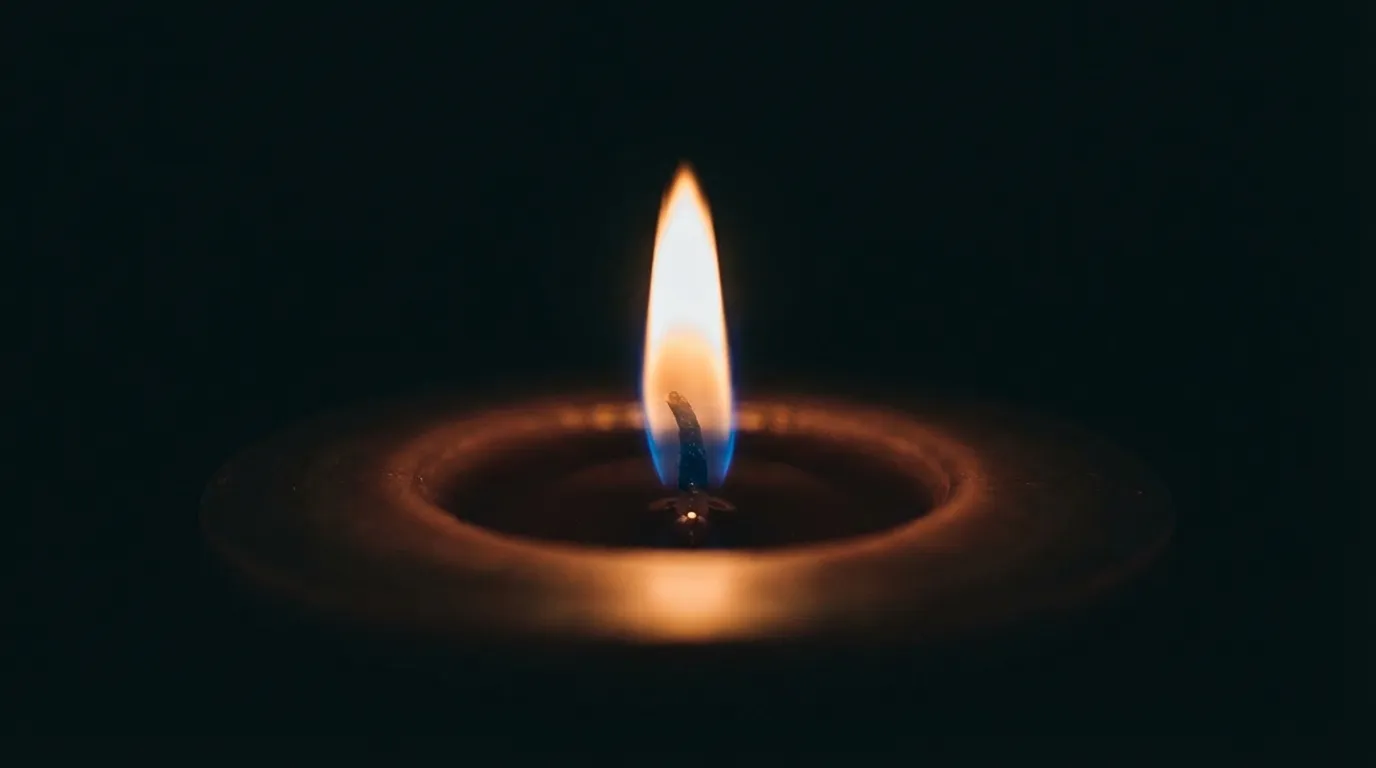
Soy wax holds fragrance differently than paraffin. It absorbs fragrance oils throughout the entire body of the wax, releasing them gradually as the wax melts. This creates a slower, more sustained scent experience.
Paraffin holds fragrance primarily near the surface and releases it quickly when heated. The initial scent burst is stronger, but the fragrance can diminish faster as the candle burns down.
For complex, multi-note fragrances, soy is often the better medium. The slow release allows top, middle, and base notes to unfold sequentially, the way a perfumer intended. Paraffin tends to push all the notes out at once, which can flatten the fragrance profile.
Cost
Paraffin is cheaper. Significantly cheaper. This is why it dominates the mass market. A candle company using paraffin can produce at a fraction of the cost of a soy-based competitor and still achieve acceptable performance.
Soy wax costs more per pound. It is also more demanding to work with. The lower melt point means it is more sensitive to temperature during production. It requires more testing to match the right wick to the right vessel. And it can be finicky about fragrance load, sometimes refusing to hold as much scent oil as paraffin.
These production challenges are why soy candles tend to be priced higher. The cost reflects the material and the craftsmanship required to make it perform well.
01 Andromeda uses a soy blend, dyed black throughout, with a cotton wick sized for the vessel. What else has to be true before a candle deserves the word clean is set out in what makes a candle clean.
The Third Option
It is worth noting that many candles on the market are neither pure soy nor pure paraffin. Blends are common, and many of the best candles available today are blends by design. Some combine soy with coconut wax for a creamier texture and better cold throw. Others build proprietary plant-based blends to dial in burn behavior, scent throw, and finish in ways a single wax cannot achieve on its own.
Blends are not a compromise. A thoughtful blend is often the result of significant testing, where each component is chosen for what it contributes. The wax type matters less than the integrity of the formulation: a clear foundation, phthalate-free fragrance, and a properly matched wick.
The Decision
If you burn candles occasionally, in large rooms, with good ventilation, the wax type is a secondary concern. Choose based on scent, vessel, and whether the candle brings you something worth the price.
If you burn candles regularly, in smaller spaces, as part of a daily routine, soy-led blends are often the more responsible choice. Slower burn, longer life, and a softer scent release. Not perfect, but meaningfully considered.
And if you care about what happens to the vessel after the wax is gone, consider what it is made of at least as seriously as what it is filled with. The candle is temporary. The object it leaves behind does not have to be.
Lyra pours a soy-based wax blend with phthalate-free fragrance and a cotton wick. Discover 01 Andromeda at lyracalifornia.com.