
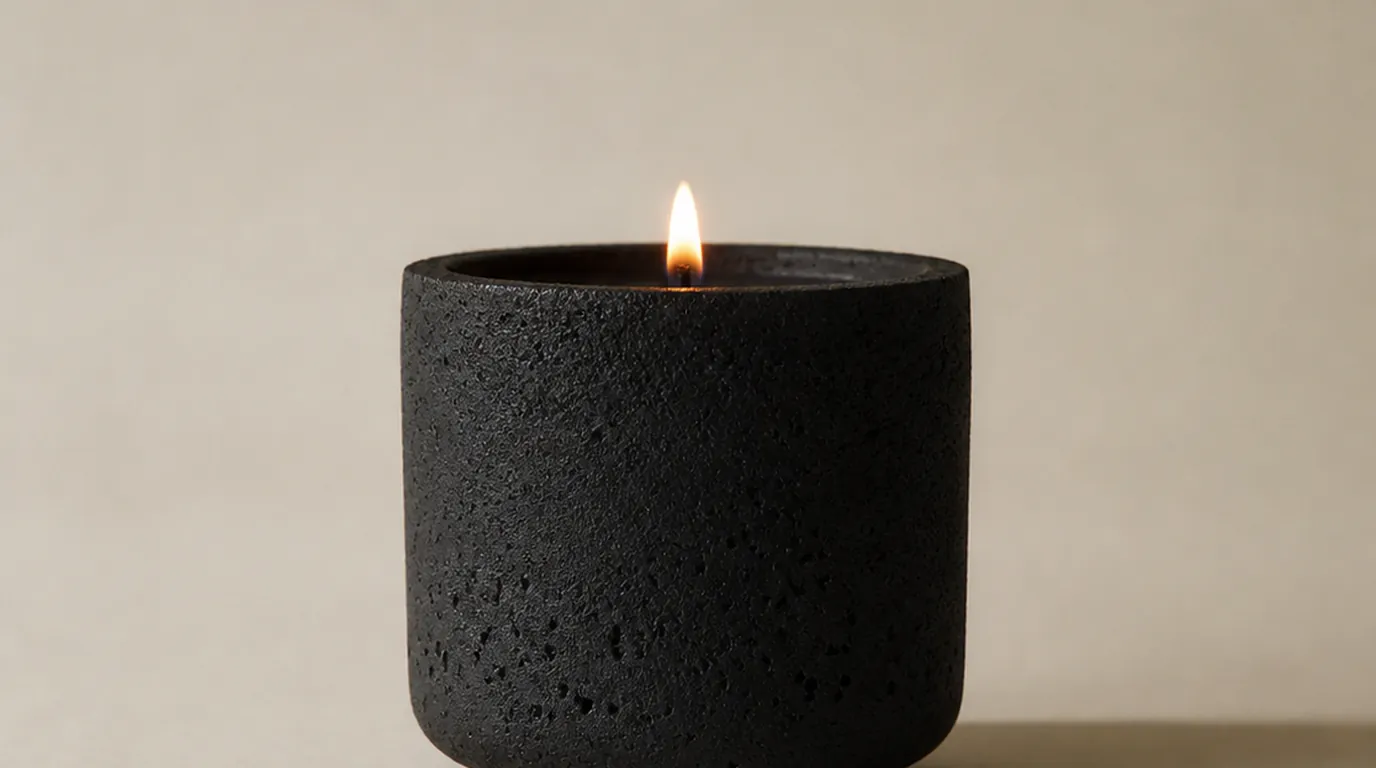
A good candle is not cheap. And a cheap candle is rarely good. So when you find one worth keeping, it makes sense to burn it well. Not cautiously, not sparingly, but correctly. The difference between a candle that lasts its full rated burn time and one that tunnels out halfway is not luck. It is a handful of small habits that take seconds and pay back hours.
The First Burn Is the Most Important
This is the rule that most people break and almost no one knows about. The first time you light a new candle, you need to let it burn long enough for the entire top surface of the wax to melt into a liquid pool. Edge to edge.
For most candles, this takes between two and three hours. For larger vessels, closer to four.
Why it matters: soy wax has memory. The melt pool you establish on the first burn sets a pattern that the candle will follow for every subsequent burn. If you blow it out after thirty minutes, with a small pool in the center and solid wax around the edges, you have just created a tunnel. The candle will continue to burn down through that center channel, leaving a ring of wasted wax permanently stuck to the sides of the vessel.
This is called "tunneling," and it is the number one reason candles underperform their rated burn time. It is also entirely preventable. Give your candle its first full melt pool, and you will never see it happen.
Trim the Wick. Every Time.
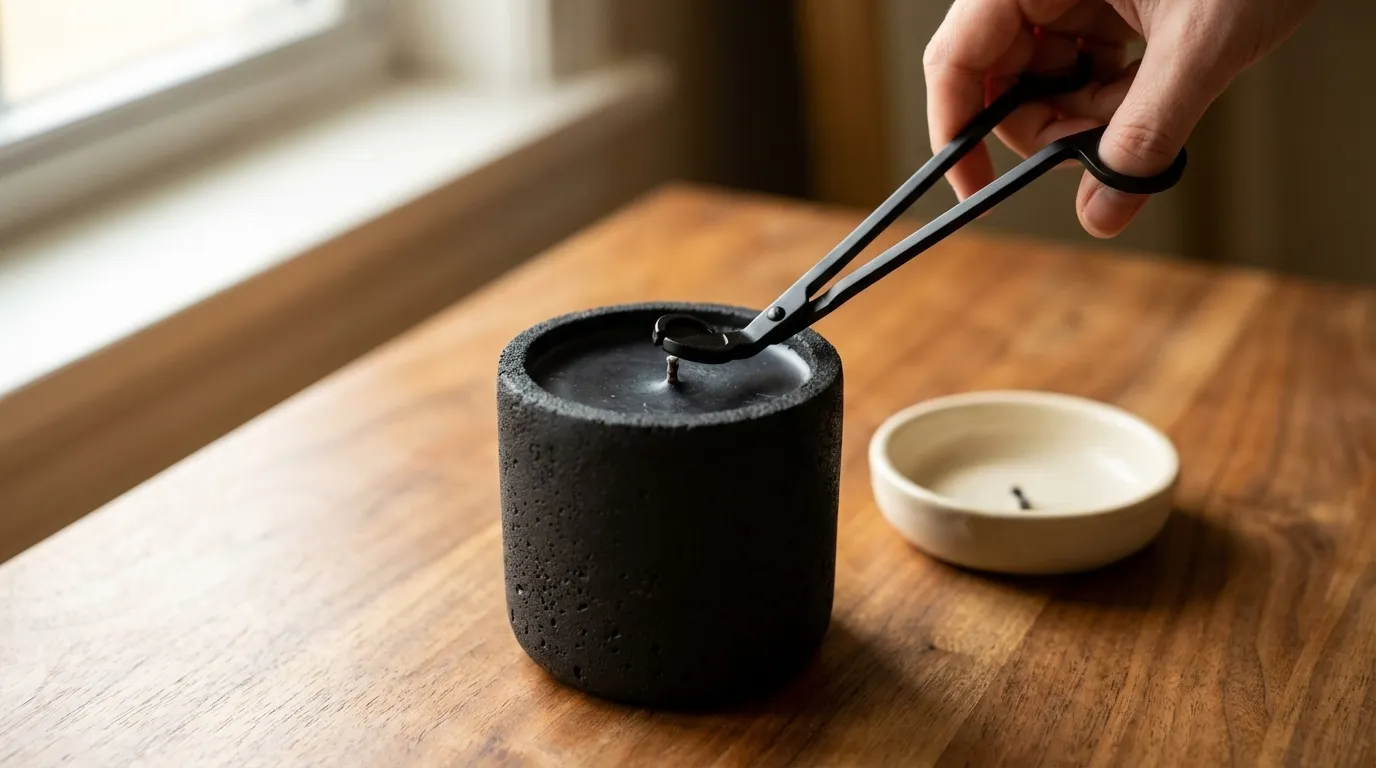
Before every burn, trim the wick to approximately one-quarter inch. This is not optional maintenance. It is the single most impactful thing you can do for your candle's performance and longevity.
A long wick produces a larger flame. A larger flame burns hotter. A hotter burn consumes wax faster, produces more soot, and can cause the vessel to overheat. It also creates that mushroom-shaped carbon buildup at the tip of the wick, which further destabilizes the flame.
A properly trimmed wick produces a smaller, steadier flame that melts wax at the rate the candle was designed for. The fragrance releases more evenly. The burn is cleaner. The candle lasts longer. It is the equivalent of keeping your tires at the right pressure: a small act that affects everything.
You can buy a dedicated wick trimmer, which makes the angle easier, or use small scissors. Nail clippers work in a pinch. The tool does not matter. The habit does.
Burn in Sessions, Not Marathons
The ideal burn session for most candles is between two and four hours. Long enough to establish a full melt pool. Short enough to prevent the wax from overheating and the fragrance from burning off faster than it diffuses.
Burning a candle for six or eight hours straight does not give you six or eight hours of optimal performance. The first three hours are good. After that, the wax gets too hot, the scent throw decreases (because the fragrance compounds are exhausted faster than they can replenish at the surface), and the wick begins to curl and produce soot.
Think of burn sessions the way you think of watering a plant. Consistent, moderate intervals beat one long drowning.
Keep It Away from Drafts
Wind is a candle's enemy. A draft from an open window, a ceiling fan, or even an air conditioning vent will push the flame to one side, causing the wax to melt unevenly. One side of the candle will burn down faster than the other, creating a lopsided pool that wastes wax and shortens burn time.
If you notice your flame dancing or flickering consistently in one direction, move the candle. A steady, upright flame is a flame that is burning efficiently.
Drafts also accelerate soot production. The uneven combustion created by a moving flame generates more particulate matter, which deposits as black residue on the vessel walls and, potentially, on nearby surfaces.
The Lid Trick
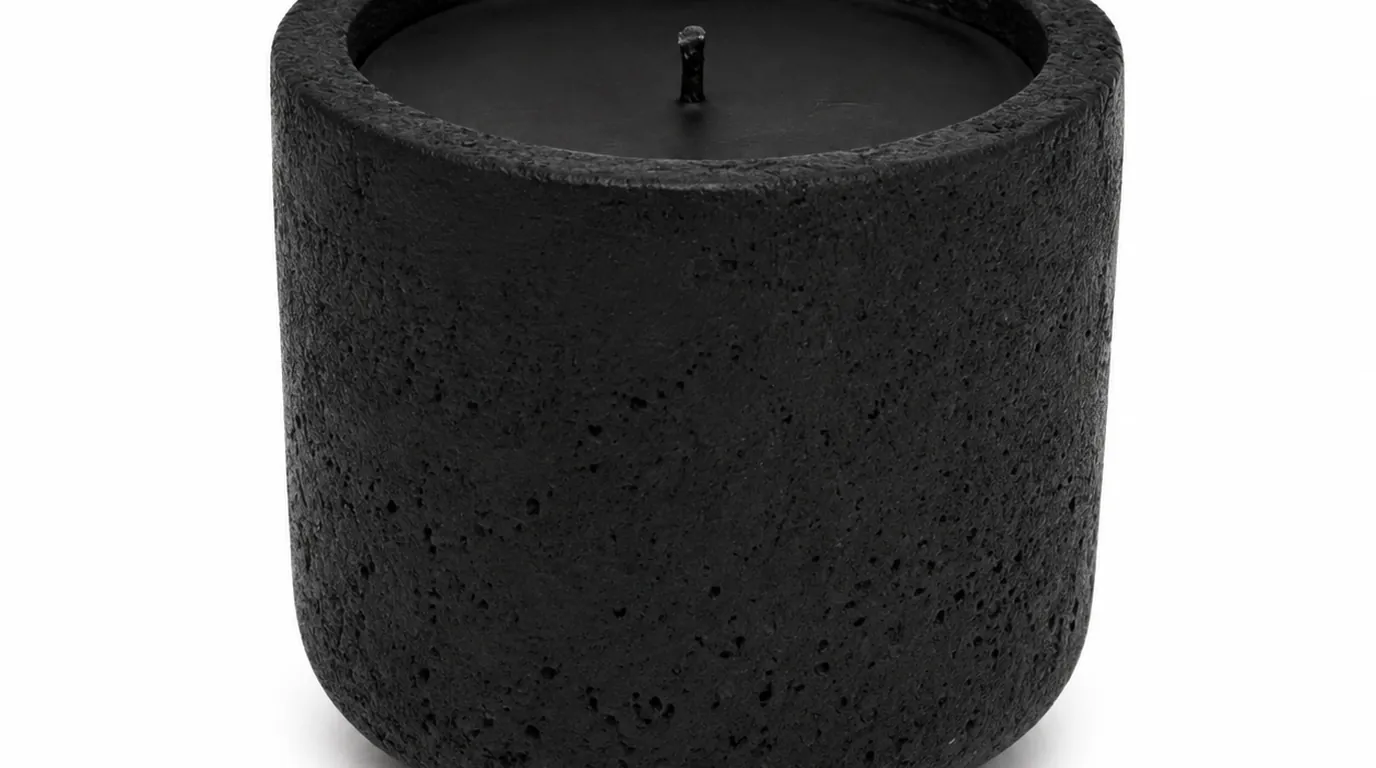
If your candle comes with a lid, use it. Not just for aesthetics or dust protection, but because a lid preserves the fragrance between burns.
Soy wax is softer and more porous than paraffin, which means it absorbs and releases scent differently. An uncovered soy candle will slowly lose fragrance even when it is not lit, as the volatile compounds at the surface evaporate at room temperature. A lid slows this evaporation significantly.
No lid? A small ceramic plate or even a coaster placed on top between burns will do the same job.
Store It Right
Heat and light degrade candle wax and fragrance over time. A candle sitting on a windowsill in direct sunlight will lose scent intensity and may develop discoloration on the wax surface.
The ideal storage environment is cool, dry, and out of direct light. A shelf in a closet, a cabinet, a drawer. If you buy candles in advance or stock up during a sale, store them in their original packaging until you are ready to burn them.
Temperature matters too. Soy wax softens at relatively low temperatures. A candle left in a hot car or near a heat source can partially melt, which disrupts the bond between wax and vessel and may cause the candle to separate from the sides of its container.
These habits are collected on Lyra's care page, which is the short version worth keeping somewhere findable. If a candle has already tunnelled, the recovery is its own job: how to fix and prevent candle tunneling.
Know When to Stop
Every candle has a floor. For most vessels, you should stop burning when approximately half an inch of wax remains at the bottom. Below that point, the flame gets too close to the base of the vessel, which can cause it to overheat, crack, or damage the surface it is sitting on.
This is especially important for concrete and ceramic vessels, which conduct heat differently than glass. They can get quite hot at the base during those final burns.
That last half inch of wax is not wasted. It is the candle's built-in safety margin. Respect it.
The Math of Good Habits
A well-made 6.7-ounce soy candle is rated for approximately 40 hours of burn time. With proper wick trimming, appropriate session lengths, draft-free placement, and a good first burn, you should get every one of those hours.
Without those habits, you might get 25.
That is 15 hours of fragrance, light, and atmosphere sitting in the difference between knowing how to burn a candle and just lighting one. It is worth the sixty seconds of care before each session.
Lyra's 01 Andromeda delivers 40 hours of clean, even burn time. Black soy wax. Cotton wick. Concrete vessel. Built for the people who pay attention. lyracalifornia.com.