
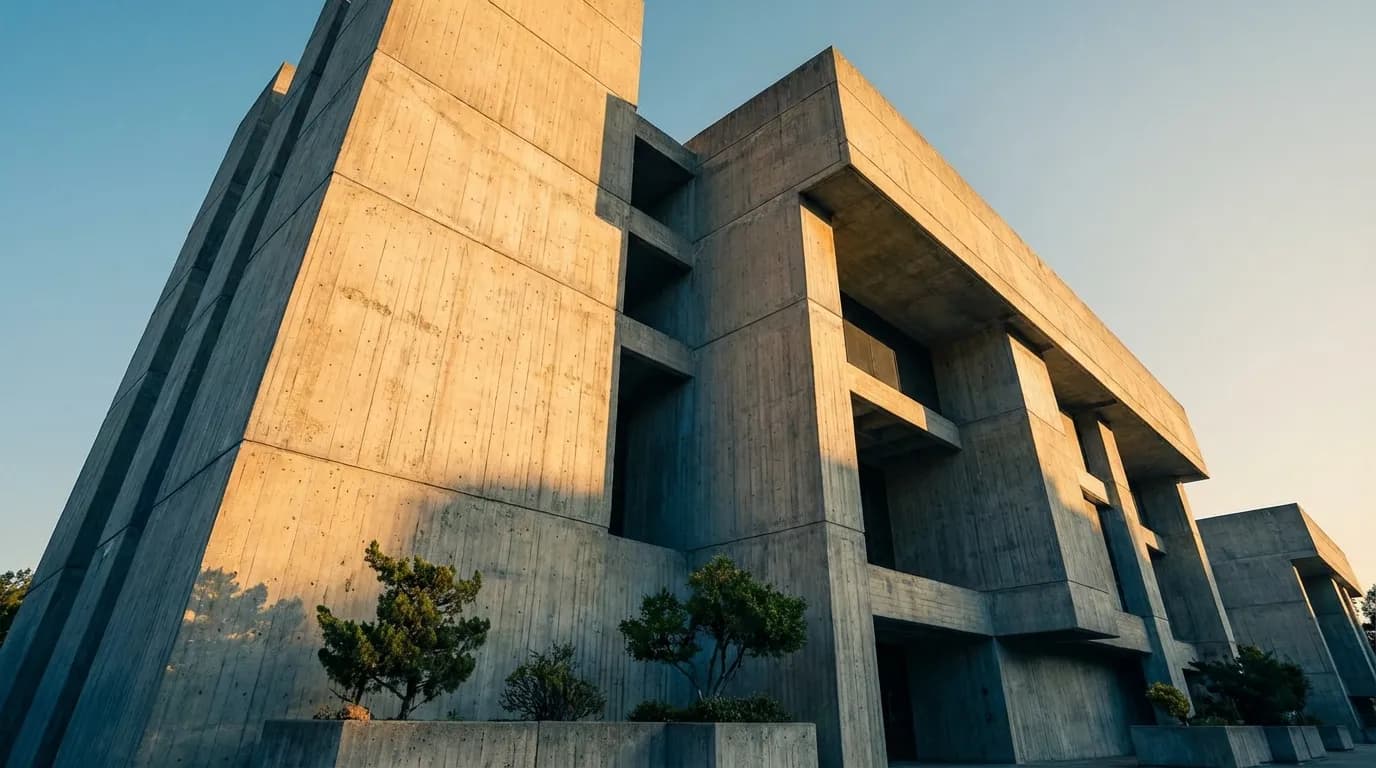
For half a century, concrete was architecture's unloved workhorse. It held up highways, braced foundations, formed the walls of university lecture halls that students avoided. It was the material of obligation, not desire. Valued for what it could do, never for what it was.
The rehabilitation of concrete is one of the quiet design stories of the past two decades. A material once associated with parking garages now appears on mantelpieces. A surface once hidden behind drywall now stands exposed as a design statement. The same substance. An entirely different conversation.
The Brutalist Origin
Brutalism gets blamed for everything wrong with postwar architecture, and the accusation is only partly fair. The movement, which flourished from the 1950s through the 1970s, built in raw concrete, or beton brut, as a philosophical choice. The idea was honesty. No ornament. No veneer. The structure is the design.
At its best, brutalism produced buildings of extraordinary sculptural power. Le Corbusier's Unite d'Habitation in Marseille. Tadao Ando's Church of the Light in Osaka. Zaha Hadid's early concrete works, where the material seemed to defy its own weight.
At its worst, brutalism produced social housing blocks that aged poorly, stained by weather and neglect, becoming symbols of civic indifference rather than architectural ambition. Concrete got the blame for the failure of the institutions that built with it.
The Material Itself
Strip away the associations and look at concrete as a material. It is, fundamentally, sand, gravel, cement, and water. Mixed and poured, it takes the shape of whatever contains it and then hardens into something remarkably durable. It resists compression better than most natural stone. It insulates against temperature fluctuation. It does not rot, rust, or burn.
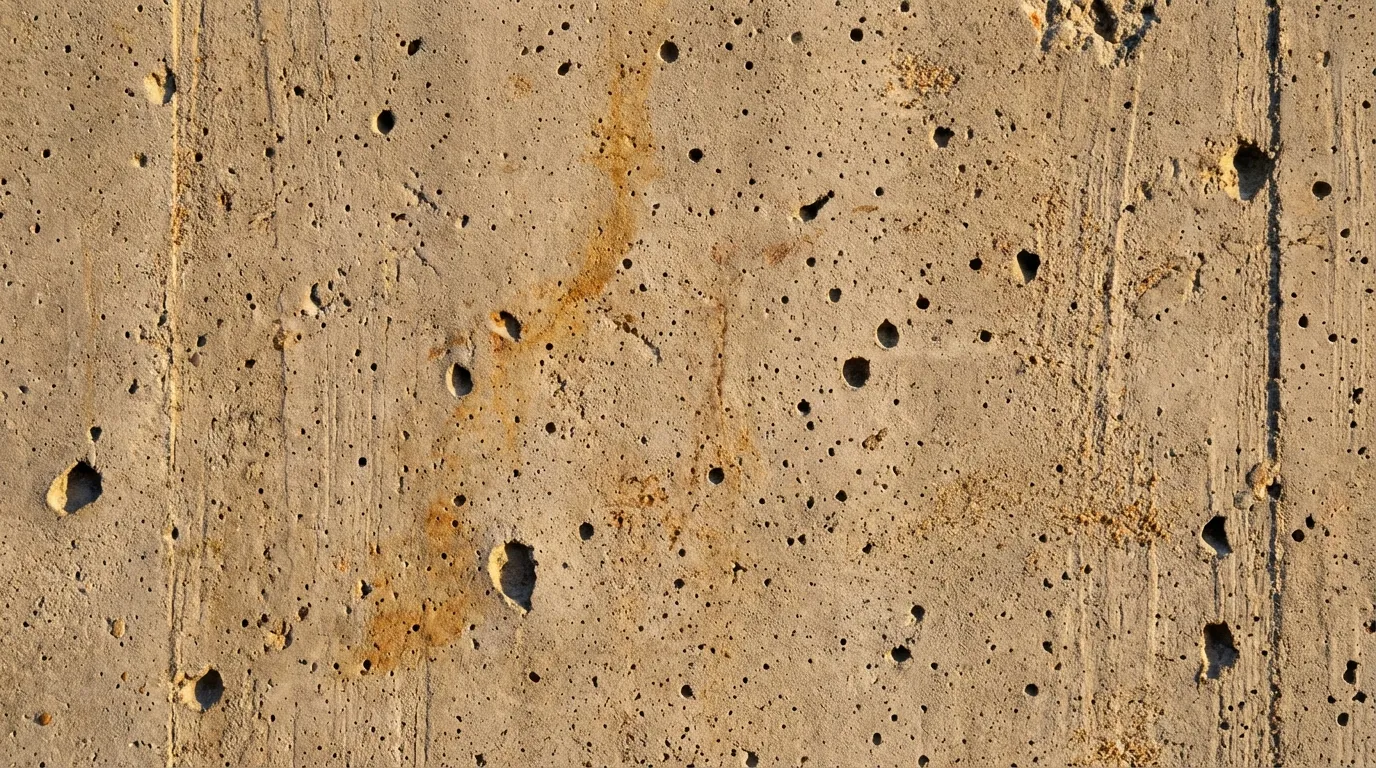
Its surface tells the story of its making. The grain of the wooden form that shaped it transfers to the finished surface. Air bubbles trapped during the pour create constellations of small voids. Mineral content in the sand and gravel gives each batch a slightly different color and texture. No two pours are identical, which means no two concrete objects are identical.
This variability, once considered a manufacturing flaw, is now understood as the material's greatest aesthetic asset. In an era of mass production and perfect replication, concrete's refusal to repeat itself reads as authenticity.
Concrete Moves Indoors
The migration of concrete from architecture into home objects followed a predictable path. Designers encountered the material in buildings and wanted to carry its qualities into smaller contexts.
In the 2010s, concrete planters became ubiquitous in the indie home goods market. Online marketplaces were flooded with them. Most were poorly made, thin-walled and brittle. But the good ones, the ones that nailed the mix ratio and the finishing, proved that concrete could work at the scale of a tabletop.
From planters, it spread to candle vessels, trays, bookends, coasters, soap dishes, and desk accessories. Each application tested the material's suitability for intimate use. Could you hold it comfortably? Would it scratch a wooden surface? Did it feel premium or industrial?
The answers depended entirely on execution. Good concrete objects feel weighty and smooth, with edges that have been sanded and surfaces that have been sealed. Bad concrete objects feel gritty, leave dust on your fingers, and look like a middle school art project.
Why Concrete Works in the Home
The appeal of concrete in domestic spaces rests on a set of paradoxes that make the material endlessly interesting.
It is heavy, but it makes a room feel lighter. A concrete object anchors a composition, allowing everything around it to float a little more freely.
It is industrial, but it reads as organic. Concrete is, after all, made from earth. Sand and stone and water. Its colors are the colors of a dry riverbed, a coastal cliff, a late-afternoon shadow on rock.
It is permanent, but it evolves. Over time, concrete develops patina. It absorbs oils from hands, darkens slightly where water has touched it, and develops a surface character that improves with age. Like leather or wood, it is a material that rewards long ownership.
It is neutral, but it has presence. A concrete vessel on a white shelf is not invisible. It is quiet but assertive. It occupies space with the confidence of something that knows it will still be there in twenty years.
Pairing Concrete with Other Materials
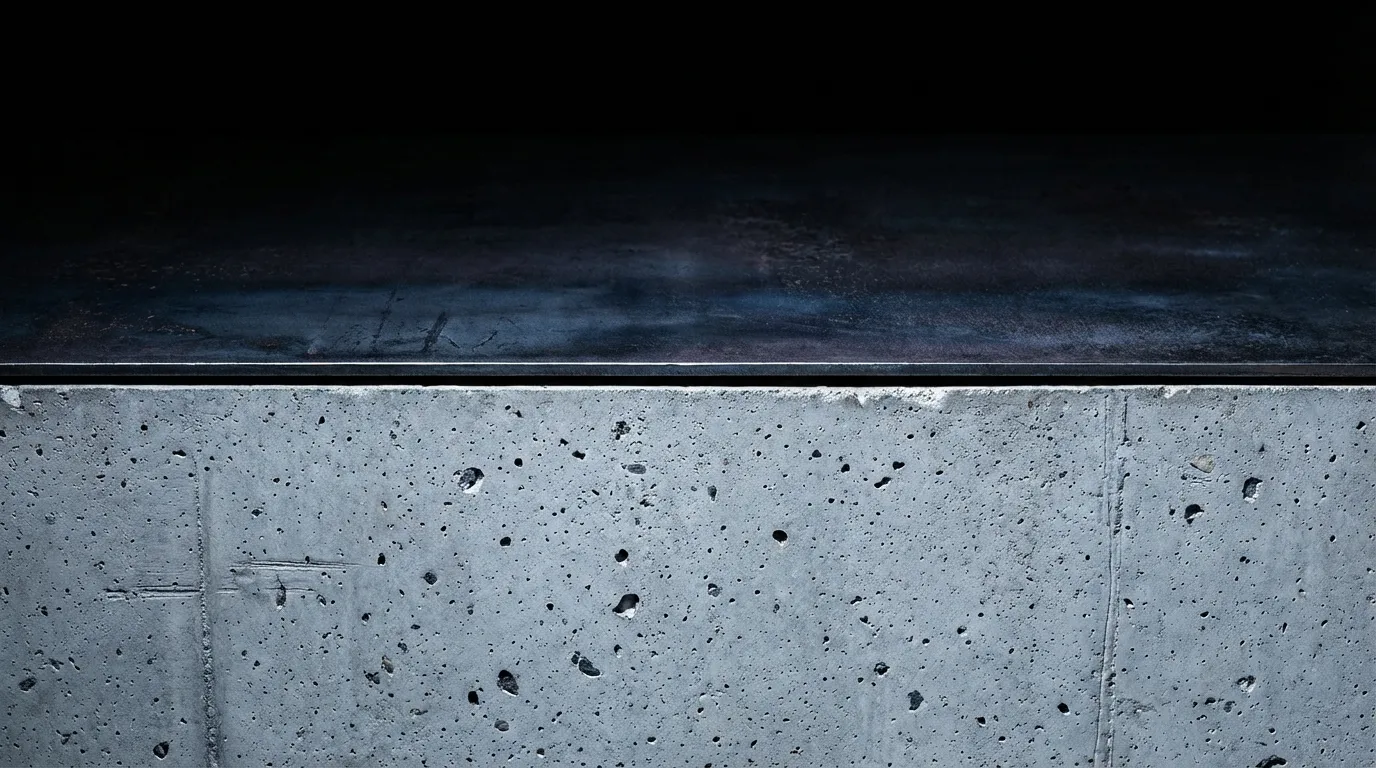
Concrete's greatest strength in interior design is its ability to make other materials look better. It is the ensemble player, not the lead. Every material near concrete benefits from the contrast.
Wood and concrete is the classic pairing. The warmth of grain against the coolness of mineral. Light oak with grey concrete. Walnut with black concrete. The combination feels both modern and ancient.
Brass and copper gain warmth against concrete's cool neutrality. A concrete tray with a brass candle holder on it looks like a piece of gallery installation. The metals pop because the concrete recedes.
Linen and cotton soften concrete's hardness. A concrete vessel on a linen runner creates a dialogue between hard and soft that makes both more interesting.
Glass next to concrete creates transparency contrast. The dense opacity of concrete makes glass look impossibly delicate. This pairing works beautifully in bathrooms and on dining tables.
Concrete as Candle Vessel
The candle application of concrete makes particular sense because it addresses one of the candle industry's persistent problems: the afterlife of the container.
A glass jar candle, once burned down, becomes waste. The jar is technically recyclable but practically difficult to clean and repurpose. Most end up in landfills.
A concrete candle vessel, once burned down, becomes a new object. Its proportions work empty. Its surface is interesting enough to justify display. Its weight communicates permanence. Clean it with warm water, and it is ready for its second life as a planter, a pen holder, a small container for rings and keys.
The best concrete vessels are designed for this transition. Their interior walls are smooth enough to clean easily. Their exterior finish is sealed against moisture. Their dimensions are proportioned to look complete without wax, not empty without it.
01 Andromeda is one version of that argument: a black soy-blend candle in a hand-cast concrete vessel, poured in California. The case for the material specifically as a candle vessel is made in concrete candle vessels.
The Honest Object
In an economy of imitation, concrete is impossible to fake. You cannot injection-mold it, 3D-print it convincingly, or replicate its weight with cheaper materials. When you hold a concrete object, you are holding exactly what it claims to be. No veneer. No disguise.
This honesty is, increasingly, the point. People are drawn to materials that cannot lie about what they are. Wood, stone, metal, concrete. Things that age, that weigh what they should, that tell the truth about their own composition.
In a home full of those materials, every object earns its place through substance rather than styling. That is not a design trend. That is a design ethic. And concrete, the material luxury forgot, is at its center.
Lyra's concrete vessel is hand-cast in California. Dense, sealed, built to become part of your home long after the wax is gone. Meet 01 Andromeda at lyracalifornia.com.