
The best dinner parties share a quality that has nothing to do with the food. It is the feeling when you walk through the door. Before you see the table, before you greet the host, before you take off your coat, you feel something. The room has been prepared. Not just set up. Prepared. And the most powerful part of that preparation is invisible.
Scent is the first guest at every gathering. It arrives before the appetizers and stays after the last glass of wine. Getting it right does not require expertise. It requires attention.
Before the Guests Arrive
Light your candle ninety minutes before the first doorbell. Not thirty. Not sixty. Ninety.
The reason is layered. First, soy wax needs time to reach full melt pool, which is when fragrance throw is at its strongest and most even. A candle that has been burning for ninety minutes is performing at its peak.
Second, you want the scent to be established, part of the room's atmosphere, by the time people arrive. A freshly lit candle has a quality of effort to it. You can smell the intention. A candle that has been burning for over an hour becomes ambient. The fragrance feels native to the space, as if the room simply smells this way.
Third, the initial top notes of the fragrance, the brightest and most volatile components, will have dispersed during that first hour. What remains when your guests arrive is the heart and base: the warmer, deeper notes that create atmosphere rather than demanding attention.
Choosing the Right Scent for Entertaining
The golden rule of hosting with fragrance is: never compete with the food. A heavily scented candle burning on a dinner table while you serve roasted lamb is a war between two sensory experiences, and both lose.
For the dining space, choose candles with moderate scent throw and profiles that complement rather than override cuisine. Warm, woody, subtly spiced fragrances work well because they occupy a different olfactory register than food. They are atmospheric rather than gastronomic.
Avoid candles that are floral-dominant, fruit-forward, or overtly sweet. These categories overlap with the scent profiles of food and can create confusing, unpleasant crossovers. A jasmine candle plus garlic bread is not a pairing. It is a collision.
The safest and most sophisticated choice for dining is a base-note-dominant candle: sandalwood, cedar, amber, muted smoke. These notes create warmth without competing with anything on the plate.
Placement Strategy
Where you place candles during a dinner party matters as much as which candles you choose.
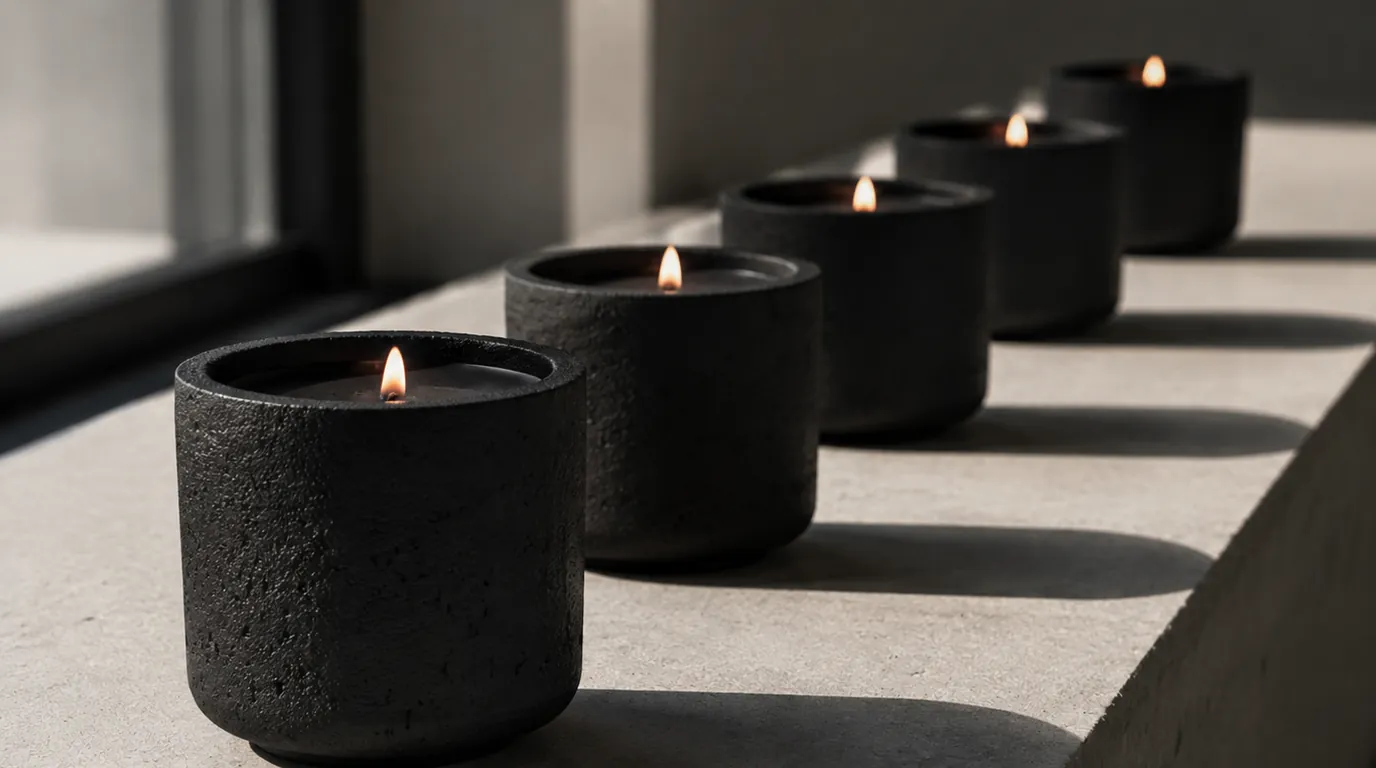
On the table: Keep candle vessels small and low. The flame should be below eye level so it does not obstruct conversation. One or two candles in the center of the table provide warm light and gentle scent without overwhelming the space. The scent throw should be mild, since the candle is close to the food.
In the entry: This is where your strongest-scented candle should live. The entry sets the tone for the entire evening. A candle with a warm, inviting fragrance at the front door creates a threshold moment. The guest crosses from the outside world into your world. The scent should be noticeable, welcoming, and distinctly different from the smell of the street.
In the bathroom: Do not forget this space. A small candle in the guest bathroom is an act of generosity that your visitors will notice and appreciate. Choose something fresh and clean rather than heavy, a scent that resets the palate.
Not in the kitchen: If you are cooking, the kitchen already has a scent. Do not add a candle to it. Let the food do its work.
One candle placed off the eating surface does more work than three placed on it. 01 Andromeda holds up at that distance because its throw is moderate rather than aggressive. If more than one scent is running in the room, read fragrance layering at home first.
Light as Design
Beyond fragrance, candles are lighting instruments. And the quality of light at a dinner party is as important as the quality of food.
The flame of a candle produces light at a color temperature of approximately 1800 Kelvin, which is warmer and more orange than even the warmest LED bulbs. This is the light that makes skin look good, that softens the edges of a room, that turns a meal into an occasion.
Combine candle light with dimmed overhead fixtures or turn the overheads off entirely. The goal is pools of warm light that create intimacy without darkness. Guests should be able to see their food and each other's faces, but the corners of the room should fade into soft shadow.
Three to five candles of varying heights create depth and dimension on a table. A single candle creates a focal point. A row of identical candles creates formality. Choose the arrangement that matches your hosting style.
The Conversation Effect
There is research suggesting that candlelight encourages deeper conversation. The mechanism is partly physiological: warm, low light reduces cortisol and promotes a relaxed, open state. It is partly social: dim lighting decreases self-consciousness, which makes people more willing to be honest.
The fragrance adds another layer. A warm, grounding scent promotes the same parasympathetic activation that the light does. Together, candlelight and scent create an environment that is neurologically optimized for the thing you actually want at a dinner party: real connection between the people at the table.
This is not an accident of atmosphere. It is the product of millennia of human gathering. Before electricity, every indoor evening gathering happened by firelight and incense. We are wired for this combination. Using it at a dinner party is not creating ambiance. It is reclaiming it.
After the Meal
When dinner ends and the evening moves into its looser, lingering phase, the candles shift from supporting players to leads. The food scents dissipate. The candle fragrance, which has been burning steadily for hours, steps forward.
This is the moment when your fragrance choice pays its greatest dividend. The right candle turns the post-dinner hour into something memorable. The conversation deepens. The wine slows. The room feels like a place no one wants to leave.
Let the candles burn through this phase. Extinguish them when the last guest reaches for their coat. The wisp of smoke that follows will be the final note of the evening, a fragrance coda that your guests will carry with them into the night air.
The Host's Secret
The best hosts make everything look effortless. The food appears without visible stress. The drinks are always full. The music is always right. The candles, the light, the scent, all of it feels inevitable, as though the evening simply unfolded this way on its own.
It did not unfold on its own. It was prepared. Ninety minutes before the doorbell, someone lit a candle. And that small act, that considered, intentional decision to shape the invisible atmosphere of a room, is what separates a meal from an evening.
Lyra's 01 Andromeda: warm enough to welcome, subtle enough to host. The candle your dinner party deserves. lyracalifornia.com.