
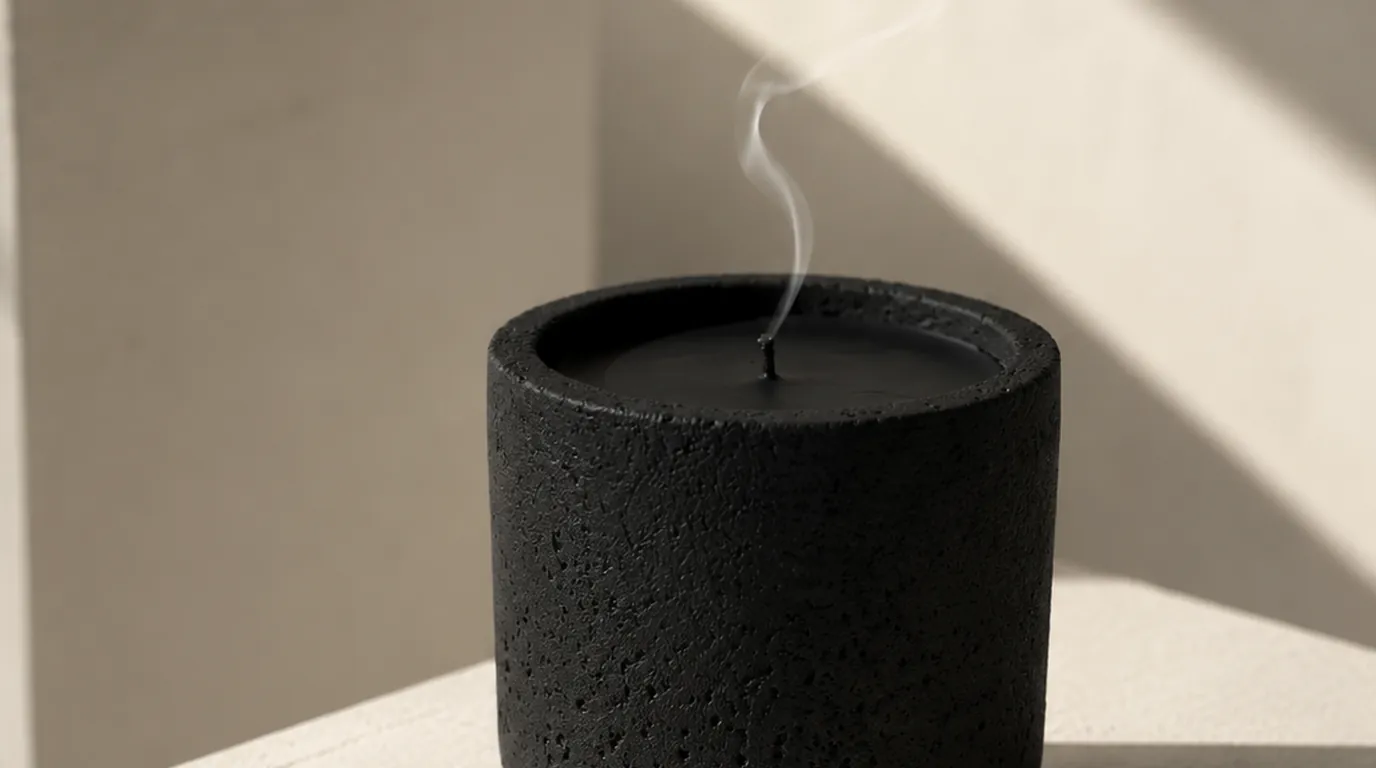
Perfumers have layered fragrance for centuries. They build accords the way composers build chords: individual notes that mean one thing alone and something entirely different together. The concept is as old as incense. The application to home fragrance is surprisingly recent.
Most people use one product per room and call it done. This works. But for those who want their space to have the olfactory equivalent of depth of field, layering opens a conversation between scents that a single source simply cannot produce.
The Principles
Fragrance layering at home follows the same logic as perfumery, scaled up to architecture.
Start with a base. The base is the scent that defines the room's identity. It should be warm, slow to fade, and present without being dominant. In a perfume, this would be the sandalwood, the musk, the amber. In a room, it is typically the candle. A burning candle with a woody or resinous base note creates a foundation that other scents can rest on.
Add a middle. The middle layer introduces complexity. This might be a reed diffuser with a slightly different fragrance profile, placed in the same room but at a different elevation or distance. Where the candle base is warm, the diffuser might lean green or floral. The two scents should share at least one common note, creating a bridge rather than a collision.
Finish with a top. The top layer is fleeting and bright. A room spray, used sparingly, can provide citrus or herbal freshness that lifts the entire composition. Use it the way a perfumer uses bergamot or grapefruit: a flash of brightness that draws you in before the deeper notes take over.
The One Rule

The layers must share a family. You cannot pair a tropical coconut candle with a fir needle diffuser and a jasmine room spray. The result will not be complex. It will be confused.
Think in scent families. If your base is woody and smoky, your layers should be adjacent: spice, resin, leather, dark florals. If your base is fresh and green, stay in that territory: citrus, herb, light musk, cucumber.
The shared note is the key. If your candle contains black pepper and your diffuser contains black pepper with cardamom, the overlap creates coherence while the cardamom adds dimension. One scent anchors. The other extends.
Practical Combinations
Evening warmth. A candle with amber and sandalwood base, burning on a low table. A reed diffuser with cedar and a touch of vanilla, placed higher on a shelf. The warmth rises and meets the wood. The room feels like sitting beside a slow fire.
Morning clarity. A citrus-and-herb diffuser running gently in the kitchen. A single spray of eucalyptus and tea near the entrance. No candle, because morning light does enough visual work. The scents are clean, awake, directional.
Weekend afternoon. A candle with jasmine and musk, burning in the living room. A linen spray with a light vetiver note on the sofa cushions. The floral and the green overlap at vetiver's smoky edge. The result is layered, unhurried, adult.
01 Andromeda layers tolerably with clean woods and plain linen, because the green citrus opening keeps it from going heavy against another warm scent. On what a single scent does to a room on its own, see how scent shapes a room.
Distance and Elevation
Where you place scent sources matters as much as what they are. Fragrance rises. A candle on a coffee table and a diffuser on a bookshelf occupy different vertical zones, which means their scent trails interact in the middle of the room rather than competing at the same level.
Horizontal distance controls intensity. Two scent sources three feet apart will blend aggressively. Two scent sources twelve feet apart will create zones of emphasis, areas where one scent leads and the other supports.
The goal is not uniform coverage. It is movement. A layered room should smell slightly different as you walk through it, the composition shifting as you pass from one source's radius to another's.
When Layering Fails
Too many products. Three is a maximum. Two is usually better. Beyond three, the room cannot resolve the competing signals and the result is noise.
Competing intensities. If both your candle and your diffuser are throwing scent aggressively, neither one can lead. One source should dominate. The others should support.
Mismatched quality. A high-quality candle with clean, complex fragrance will not layer well with a cheap reed diffuser throwing synthetic sweetness. Quality gaps between products become obvious when they are asked to coexist.
Forcing it. Not every room needs layering. A single excellent candle in a bedroom is complete. A single diffuser in a hallway is complete. Layering is for spaces where you want depth, not for spaces that already feel right.
The Subtlety Standard
The best-layered rooms do not announce their complexity. Guests should not walk in and think "this person is using three fragrance products." They should walk in and think "something smells incredible in here, and I cannot quite identify it."
That moment of pleasant confusion, where the scent is clearly present but resists easy categorization, is the signature of successful layering. It creates the same response that a well-mixed cocktail produces: you taste something extraordinary, and you cannot pick out the individual ingredients.
This is the standard to aim for. If you can identify each layer separately, the blend is not working. If the room smells like one seamless, unfamiliar, beautiful thing, you have found it.
Lyra's 01 Andromeda, with its layered profile of citrus, black pepper, jasmine, smoke, and sandalwood, is designed as a complete foundation. Sometimes one candle is all the layers you need. lyracalifornia.com.