
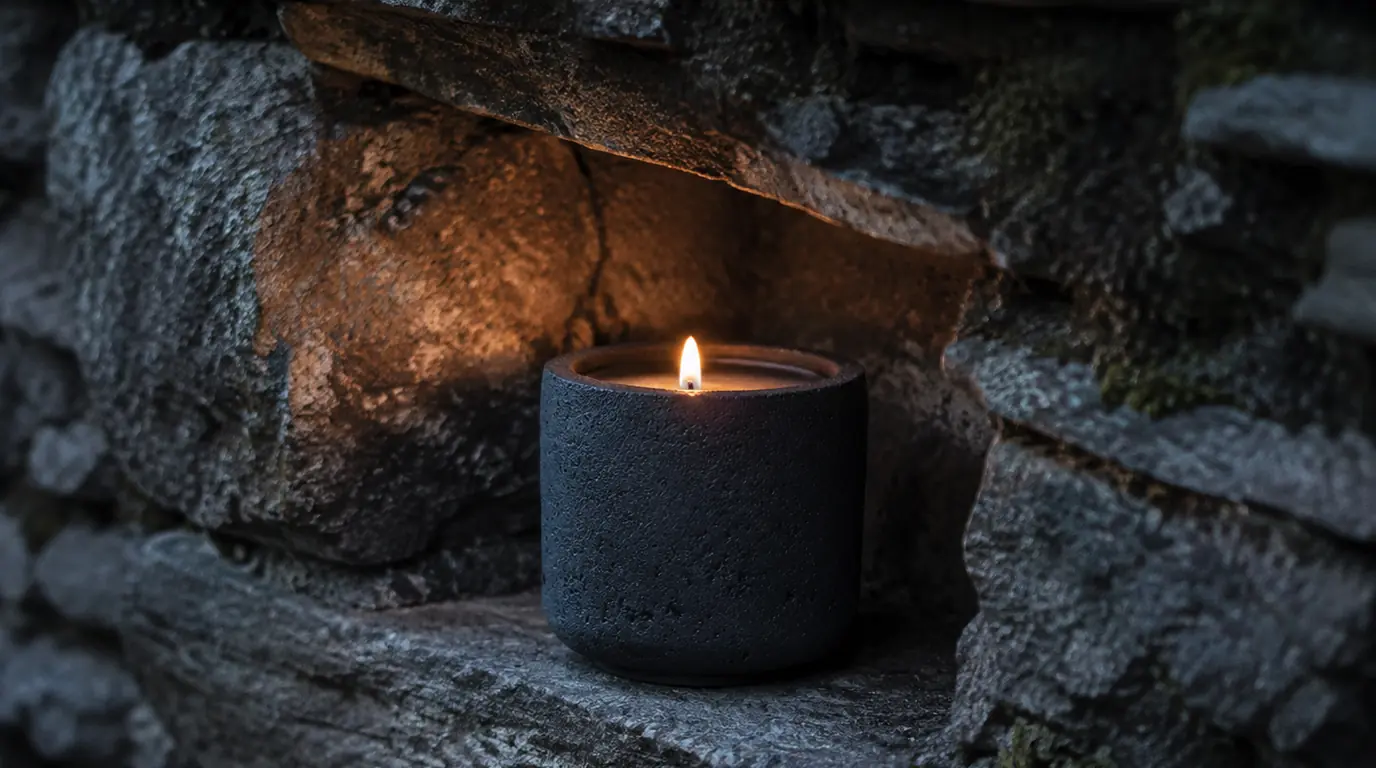
Somewhere between the third reed diffuser and the second plug-in, a home stops smelling intentional and starts smelling anxious. Like it is trying too hard. Like every room is auditioning for a different mood.
Minimalist home fragrance is not about deprivation. It is about precision. One well-chosen scent in the right vessel, placed with thought. That is all a room needs. Often, it is more than enough.
The Problem with More
The home fragrance industry has a vested interest in convincing you that every room needs its own product. A candle in the bedroom. A diffuser in the bathroom. A spray for the linen closet. A wax melt for the kitchen. Each one a separate purchase, a separate scent, a separate design problem.
The result is fragrance clutter. Walk through the average scented home and you will encounter four or five competing olfactory signals before you reach the kitchen. None of them are strong enough to define a space. All of them are present enough to create noise.
This is the olfactory equivalent of hanging art on every wall, in every room, at every height. It does not create richness. It creates confusion.
The Case for One
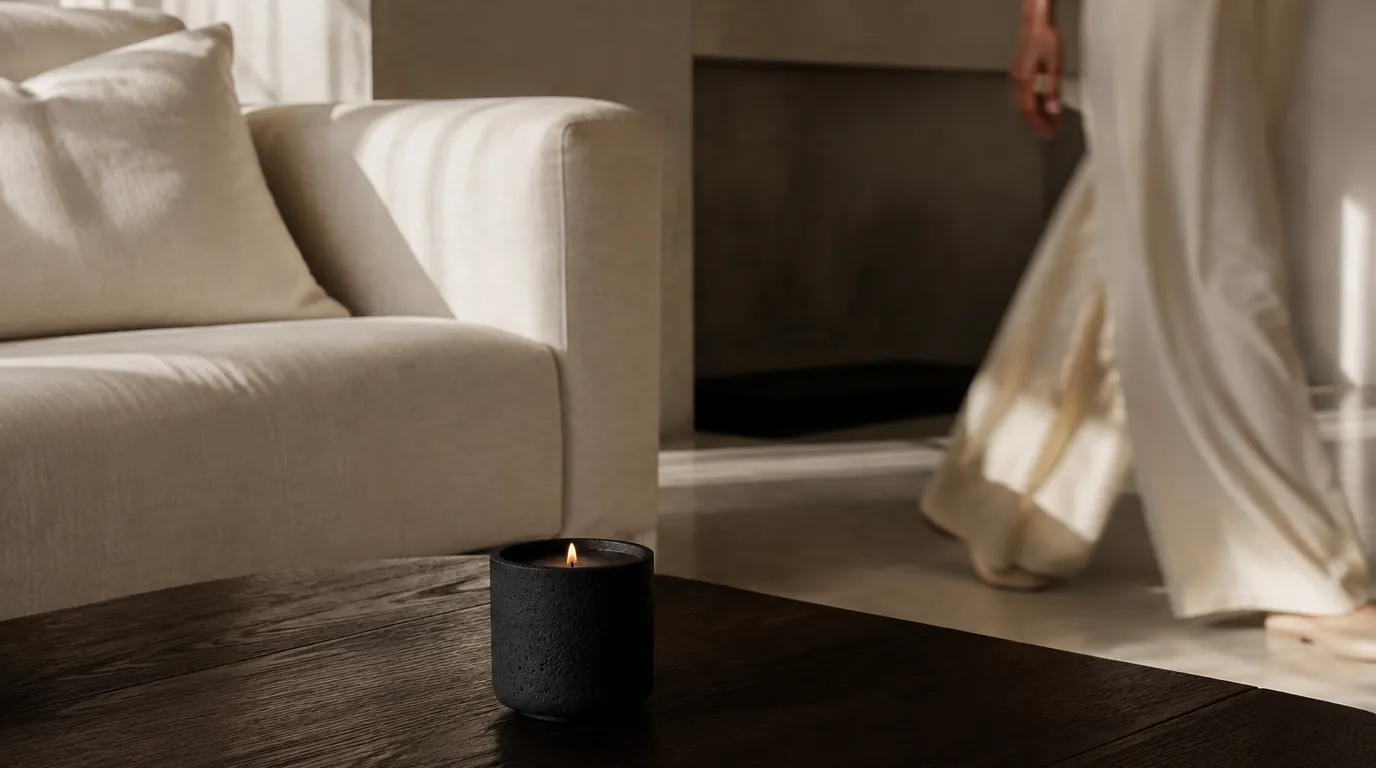
The most powerfully scented homes tend to have one signature fragrance. Maybe two, if the home is large and the zones are distinct. But the default, the through-line, is singular.
Think about the spaces that have stayed with you. A particular friend's apartment. A hotel you loved. A shop you wanted to linger in. Chances are, those spaces had a single, coherent scent. Not because they could not afford variety, but because they understood that a single scent, experienced consistently, becomes part of the architecture. It becomes what that place smells like.
This is what perfumers call "sillage" applied to a space rather than a person. It is the trail, the memory, the invisible signature that identifies a room long after you have left it.
If the answer is one candle, it has to be a scent that does not tire. 01 Andromeda was built to that brief, green and dry at the opening and warm underneath. The wider aesthetic it belongs to is described in quiet luxury at home.
Quality Over Quantity
Minimalist fragrance is not about spending less. It is about spending once and spending well.
A single candle made with quality wax, a considered fragrance profile, and a vessel that earns its place in your home will do more for a room than five products from the checkout aisle of a home goods store. The difference is not just olfactory. It is visual. It is tactile. It is the difference between a curated object and accumulated stuff.
The right candle on a nightstand does triple duty. It scents the room. It provides light. It serves as a design object. No other home fragrance product can claim all three.
Choosing a Minimalist Scent
If you are going to commit to one fragrance for your space, choose one that lives in the middle of the spectrum. Not too floral, not too woody. Not too sweet, not too sharp. A well-constructed scent with a journey, one that opens with something bright and settles into something warm, will hold your interest far longer than a one-note fragrance that announces itself and then has nothing more to say.
The fragrance industry calls this "complexity," but a simpler word is "depth." You want a scent that you notice when you light it, forget about while it burns, and then notice again when you return from another room. That cycle of discovery and familiarity is what keeps a scent from becoming wallpaper.
Avoid anything that can be described in a single word. "Vanilla." "Ocean." "Lavender." These are not scents. They are labels. A real fragrance is a composition. It has layers that reveal themselves over time, the way a good wine opens in the glass.
The Vessel as Object
In minimalist homes, every object carries weight. There are no fillers, no placeholders, no things-that-are-just-there. Every piece either earns its position or gets edited out.
This means the candle vessel must work as a standalone object. It needs to hold visual interest even when it is not lit, even when the wax is gone. A thin glass jar with a paper label will never pass this test. A vessel made of concrete, ceramic, or hand-cast material might.
The best minimalist candle is the one that you would display even if it had no wick. Its proportions are right. Its surface is interesting without being busy. Its color and texture converse with the other objects on the shelf rather than competing with them.
Placement as Practice
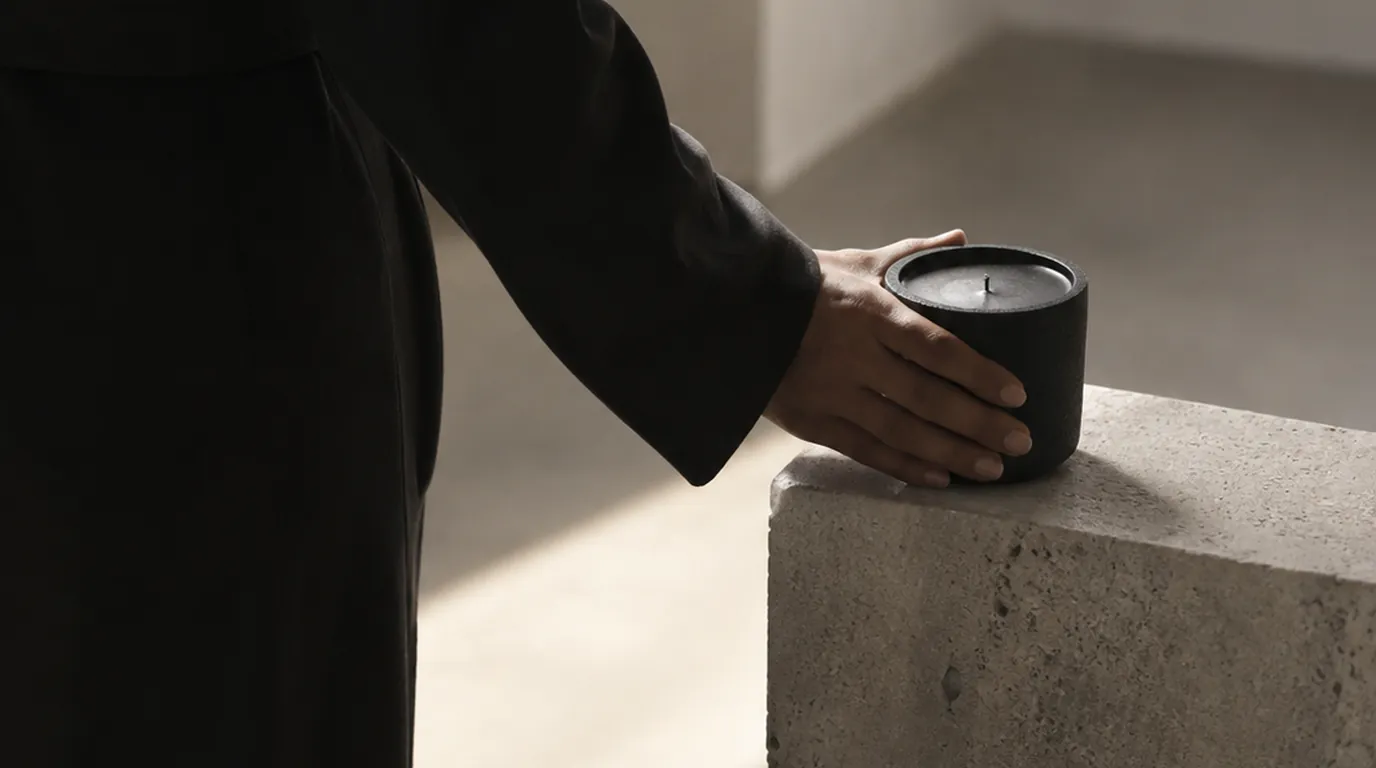
Where you put a candle matters more in a minimal space than in a cluttered one. In a room with twenty objects, a candle is just another thing. In a room with five, it is twenty percent of the visual composition.
Consider negative space. A candle on an otherwise empty console becomes a focal point. A candle between two stacked books becomes a punctuation mark. A candle at the end of a bathtub ledge becomes an invitation.
Minimalist placement follows the same principles as gallery installation. Give the object room to breathe. Let it exist in relation to the space around it, not just the surface beneath it. The air between the candle and its nearest neighbor is part of the design.
The Discipline of Restraint
Minimalism is not easy. It requires saying no far more often than saying yes. This applies to fragrance the same way it applies to furniture, clothing, and everything else in your environment.
The temptation will always be to add. A new seasonal scent. A diffuser for the guest bathroom. A spray for the days between candle burns. Resist. Each addition dilutes the clarity of what is already there.
If your one candle is not doing enough, the answer is not to add a second product. The answer is to reconsider the candle. Maybe the scent throw is too soft. Maybe the vessel is too small for the room. Maybe the fragrance itself is not complex enough to hold the space alone.
Fix the choice. Do not multiply it.
The Reward
A minimalist approach to home fragrance does something that abundance cannot. It creates a sense of place. When you walk into your home and encounter a single, familiar scent, the experience is not just pleasant. It is grounding. It says: you are here. This is yours. Everything else can wait.
That is not a candle doing its job. That is a home doing its job. The candle is simply the instrument.
Lyra makes one candle at a time. 01 Andromeda: black soy wax, concrete vessel, California-poured. The only fragrance your space needs. lyracalifornia.com.