
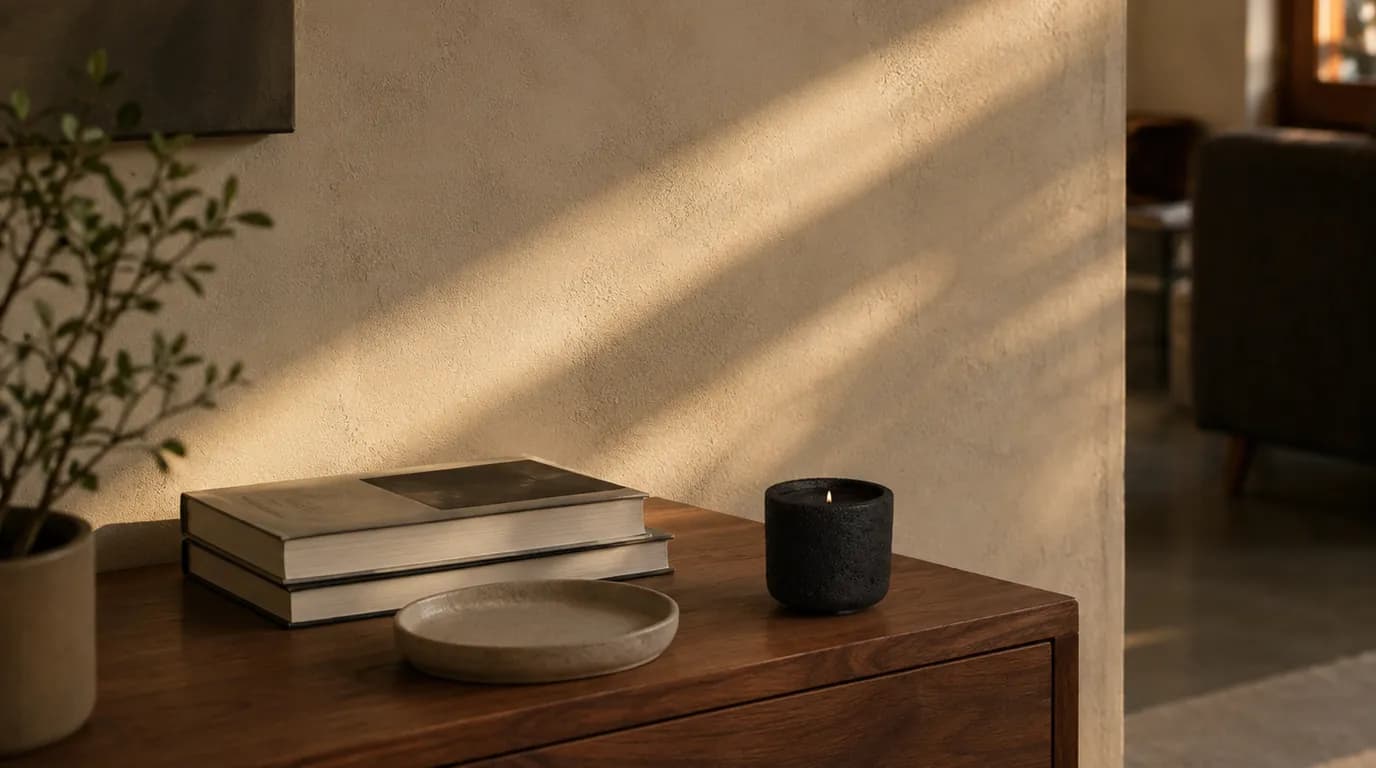
The loudest era in home decor is ending. Not with a crash, but with a deliberate, almost imperceptible exhale. The gold-everything aesthetic. The logo-covered throw pillows. The marble slabs that screamed "look what I can afford." All retreating to make room for something that requires more confidence and less square footage in your Instagram grid.
Quiet luxury in home goods is not a trend. It is a correction.
What Quiet Luxury Actually Means
The term migrated from fashion, where it described brands like The Row, Loro Piana, and Brunello Cucinelli. Clothes with no visible logos, exceptional materials, and prices that reflect craft rather than clout. You could not identify the brand from across the room. You had to touch the fabric, notice the construction, ask where it was from.
Applied to home goods, quiet luxury follows the same logic. It is a ceramic vase with no label that costs more than the branded one because the glaze was developed over years, not selected from a catalog. It is a linen napkin that feels like inheritance even though you bought it last month. It is a candle in a concrete vessel that looks like a small sculpture, not a gift shop impulse buy.
The common thread is intentionality. Every material choice, every proportion, every finish exists for a reason beyond aesthetics. And the result speaks for itself, to the people who are paying attention.
Why the Shift Happened
Several cultural currents converged. The pandemic years forced people to live with their objects, not just display them. Things that looked good in photos but felt cheap in daily use got noticed, reconsidered, and often discarded.
Social media matured. The Instagram aesthetic of maximalist, highly stylized interiors began to feel performative to the generation that grew up on it. A backlash formed, not toward minimalism exactly, but toward authenticity. People started asking what their homes would look like if no one else could see them. The answers tended to be simpler, warmer, and far less concerned with labels.
The economy played a role too. When spending tightens, the people who still spend tend to spend more carefully. The calculus shifts from "how much can I accumulate" to "what single object can I live with for years." That is quiet luxury's sweet spot.
The Objects That Define It
You recognize quiet luxury in the home by what is missing as much as what is present.
No visible branding. The object does not need a logo to explain itself. Its quality is apparent in its weight, its texture, the way light falls across its surface.
Natural, honest materials. Stone, wood, ceramic, concrete, linen, wool. Materials that age rather than deteriorate. That develop patina rather than wear marks.
Considered proportions. Nothing too large for its surface, nothing too small for its room. Every dimension feels deliberate.
Restrained color. Not colorless. But the palette tends toward earth, charcoal, cream, muted greens. Colors that exist in nature, not in a trend forecast.
Utility. Quiet luxury objects are not decorative for decoration's sake. The bowl holds fruit. The candle lights the room. The throw keeps you warm. Beauty is a byproduct of function, not a substitute for it.
The Fragrance Connection
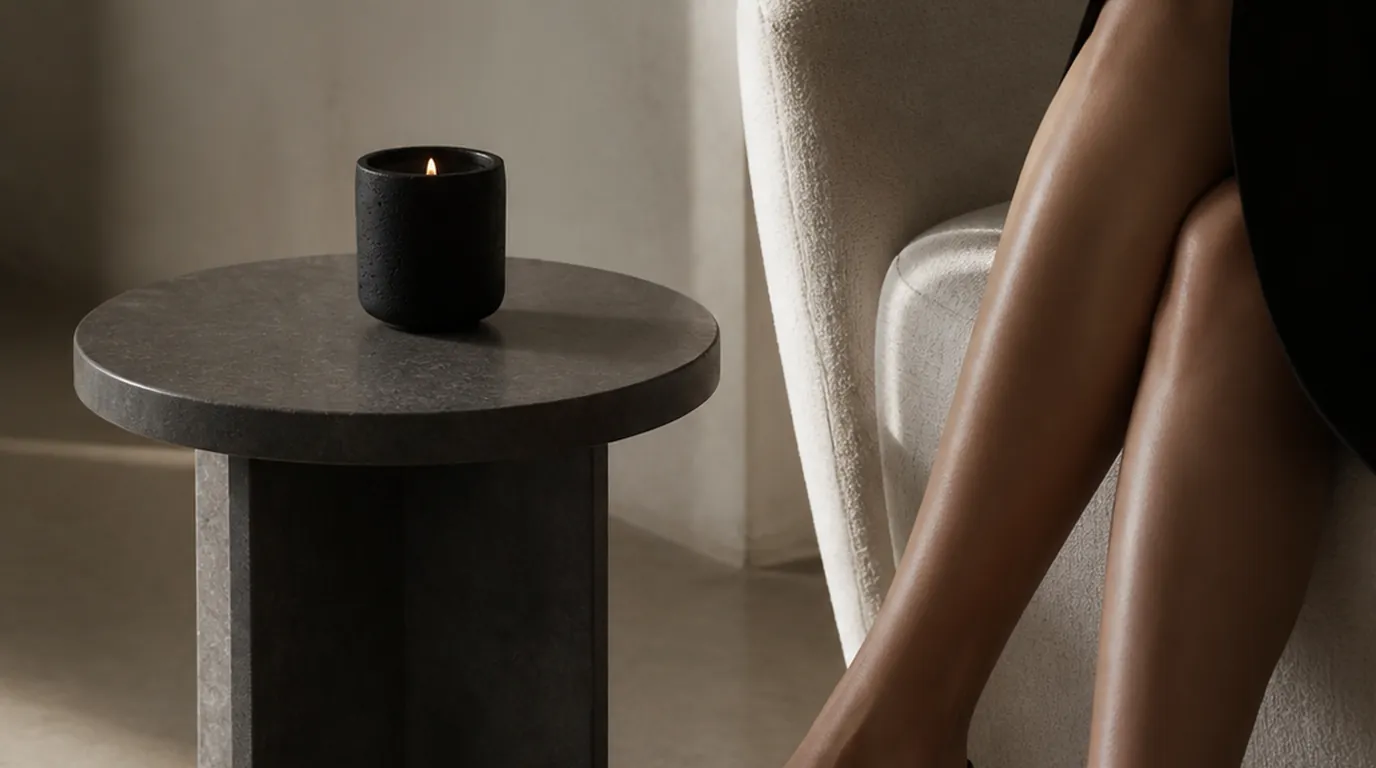
Home fragrance is one of the categories most transformed by the quiet luxury shift. For decades, luxury candles signaled themselves through packaging: ornate boxes, heavy glass jars with gold lettering, tissue paper and ribbon. The unboxing was the experience. The candle itself was almost secondary.
The new approach inverts this. The vessel is the star. The packaging is minimal, often recycled or recyclable. The fragrance is complex but never loud. You do not smell a quiet luxury candle and immediately identify "vanilla" or "rose." You smell something that makes you pause, something that takes a moment to understand, something with layers that unfold over an evening.
The brands leading this shift share a philosophy: the candle should be the quietest important thing in the room. Not invisible. Not shy. Just confident enough not to shout.
01 Andromeda carries no branding on the vessel itself, which is the entire idea. The same restraint applied to scent rather than furniture is in minimalist home fragrance.
Living with Less, Better
Quiet luxury is fundamentally about editing. It asks you to own fewer things and to care more about the things you keep. This is harder than it sounds. Accumulation is easy. Curation requires taste, patience, and the willingness to leave a shelf empty until the right object presents itself.
But the reward is real. A home with fewer, better objects feels calmer. It requires less maintenance. It creates less visual noise, which translates directly into less mental noise. There is a reason that the most productive people tend to work in the sparest rooms.
This does not mean your home should feel like a gallery. Warmth is not the enemy of restraint. A well-worn leather chair, a stack of books with cracked spines, a candle burned down to its last third. These are the signs of a home that is lived in and loved, not just curated.
The key is that every object earns its place. Not because it cost a certain amount, but because it does something, means something, or simply makes the room feel more complete.
The Confidence to Be Quiet
There is a particular kind of confidence required to choose subtlety over spectacle. It is the confidence of someone who knows what they like and does not need external validation to confirm it.
In fashion, this looks like wearing cashmere with no label instead of a logo hoodie. In the home, it looks like lighting a dark, unbranded candle on an unfinished wood table instead of arranging a dozen scented products for visual impact.
Both choices require the same thing: trust in your own taste. The object is not there to impress anyone. It is there because it belongs.
Lyra was built for homes that speak in low tones. One candle. One scent. One vessel that earns its place. Discover 01 Andromeda at lyracalifornia.com.