
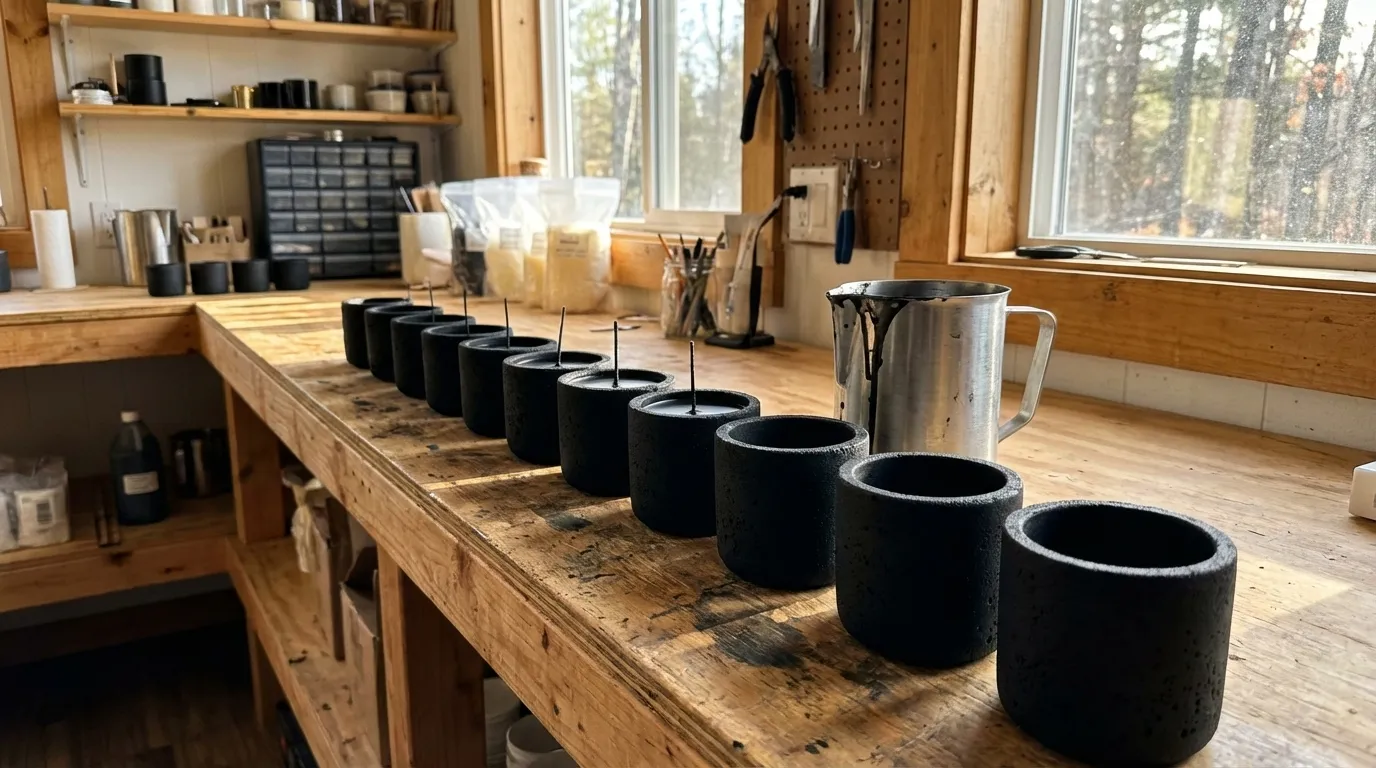
Every candle was hand-poured once. Before the machines, before the factories, before the output-per-hour metrics and the global supply chains, someone stood over a melting pot and poured wax into a vessel by hand. They checked the temperature. They centered the wick. They waited.
That process has not changed for small-batch candle makers. What changed is that an industry grew up around them, optimizing for volume and cost in ways that make the handmade version look inefficient. And it is inefficient. That is precisely the point.
What "Small Batch" Actually Means
The term has no legal definition, which means it gets abused. A company pouring 10,000 candles a day in a factory could technically call their run "small batch" relative to the output of a Yankee Candle plant. Context matters. Intent matters more.
In practice, genuine small-batch candle making means pouring in quantities small enough that one person or a small team can manage quality control at every stage. Temperature checks on the wax. Visual inspection of the pour. Wick centering by hand. Cure time that is not compressed to meet a shipping deadline.
The batch size varies, but the philosophy is consistent: every candle gets individual attention. No unit is treated as expendable. No defect gets waved through because hitting a volume target matters more than hitting a quality standard.
What Changes at Scale
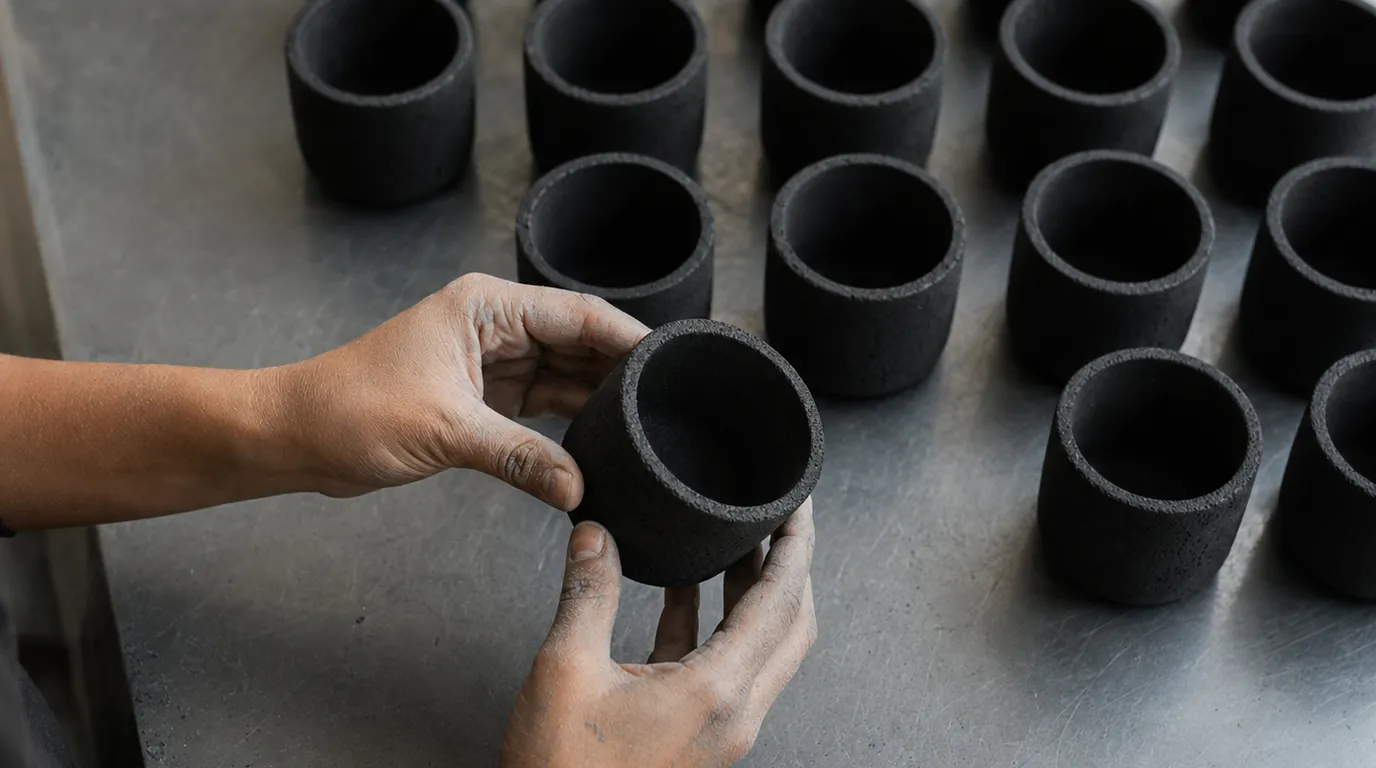
When a candle company scales to mass production, several things shift.
Wax sourcing changes. To maintain consistent supply at high volume, large producers lock in commodity-grade wax, often paraffin or low-quality blends, from suppliers who prioritize cost and availability over composition.
Fragrance loading gets standardized. Mass producers use fragrance oils at the minimum percentage needed to produce acceptable scent throw. Going above that minimum would cut into margins without producing a difference that most casual consumers would notice. Small-batch makers, working on tighter tolerances, can optimize fragrance load for each specific vessel and wax combination.
Wicks are selected by spreadsheet. In mass production, one wick size serves an entire product line. In small-batch production, the maker can test multiple wick sizes against a specific vessel and adjust, sometimes choosing a different wick for a different fragrance because the oil's viscosity affects combustion.
Cure time gets compressed. Soy candles need time to cure after pouring, typically a week or more, for the wax and fragrance to bond fully. Mass producers often ship before the cure is complete because warehouse space costs money. Small-batch producers can afford to wait.
The vessel becomes a cost center. When you are producing millions of units, the vessel is the biggest per-unit expense after fragrance. This is why most mass-market candles come in the same thin glass jars. The molds already exist. The supply chain is optimized. Switching to concrete, ceramic, or any material with higher cost and lower yield is financially irrational at scale.
What the Consumer Gets
The practical differences between a well-made small-batch candle and a mass-produced one are detectable to anyone paying attention.
Burn quality. A small-batch candle with a properly matched wick burns cleaner, with a more even melt pool and less soot. The maker had the time and incentive to test the specific wick-wax-vessel combination until it performed correctly.
Scent complexity. Because small-batch makers can work with higher-quality fragrance oils and optimize the load for each product, the scent tends to be more layered and more interesting. There is a difference between a candle that smells like "vanilla" and a candle that smells like vanilla and tonka bean and dry amber with a whisper of smoke. That difference is the space between commodity and craft.
Vessel character. Small batches allow for materials and processes that do not scale. Hand-poured concrete. Hand-thrown ceramic. Finishes that require individual attention. The result is a vessel with personality, with slight variations that mark it as made rather than manufactured.
Consistency within range. This sounds paradoxical, but hear it out. A mass-produced candle is identical to every other candle in its run. A small-batch candle varies slightly from its siblings, tiny differences in surface texture, wax marbling, vessel coloring, that give each unit its own character while staying within the maker's quality range. These variations are not defects. They are evidence of a human process.
The Maker's Advantage
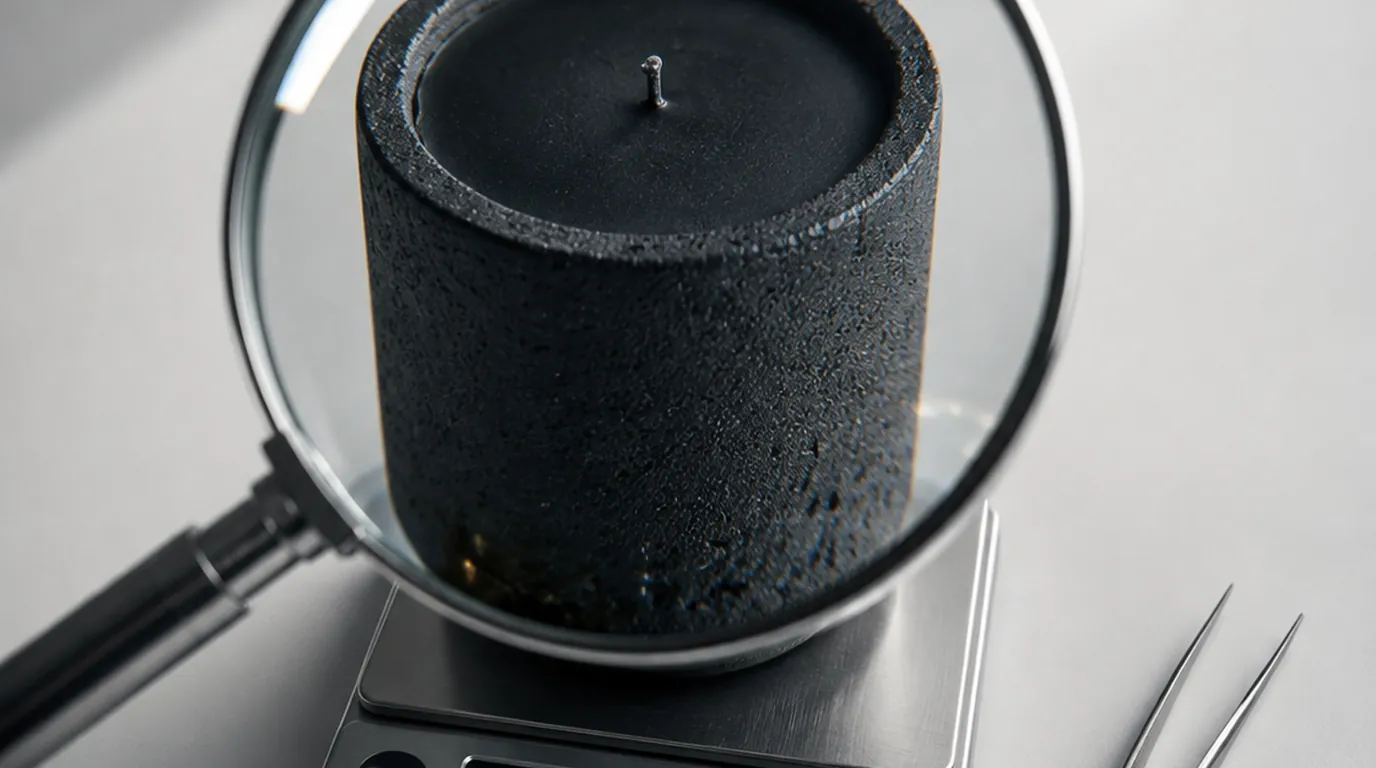
Small-batch candle makers have one advantage that no large company can replicate: they can iterate in real time. If a customer reports that a particular fragrance burns too fast, the maker can adjust the wick or the fragrance load in the next batch. If a new vessel shape causes unexpected tunneling, they can modify the wick position within days.
Large companies cannot do this. Their production cycles are planned months in advance. Their supply chains are locked. Changing a wick size requires re-engineering the production line, which requires budget approval, which requires quarters of data proving the change is necessary. By the time the fix arrives, thousands of suboptimal candles have shipped.
The small-batch maker's speed is a quality mechanism. It means problems get solved before they become systemic. It means the product is always improving, always being refined based on direct feedback from the people who use it.
01 Andromeda is poured by hand in Los Angeles in batches of roughly a hundred and forty. Where the difference actually shows up in the finished candle is covered in what makes a candle clean.
The Question of Value
A small-batch soy candle in a concrete vessel costs more than a mass-produced paraffin candle in a glass jar. The question is whether the difference is worth it.
The answer depends on what you value. If a candle is a background commodity, something you buy at the grocery store and light without thinking about it, the mass-produced version is fine. It will burn. It will smell like something. It will do its job.
If a candle is an object in your home, something you chose for a reason, something that sits on a surface you curated and scents a room you care about, then the quality gap matters. The cleaner burn matters. The better scent matters. The vessel that stays on your shelf for years matters.
Small-batch is not better because it is small. It is better because the constraints of small-scale production, the lack of automation, the individual attention, the time to cure, create a product that large-scale production cannot match.
The hands matter. They always have.
Lyra candles are poured in small batches in California. Each one tested, cured, and shipped when it is ready. lyracalifornia.com.