
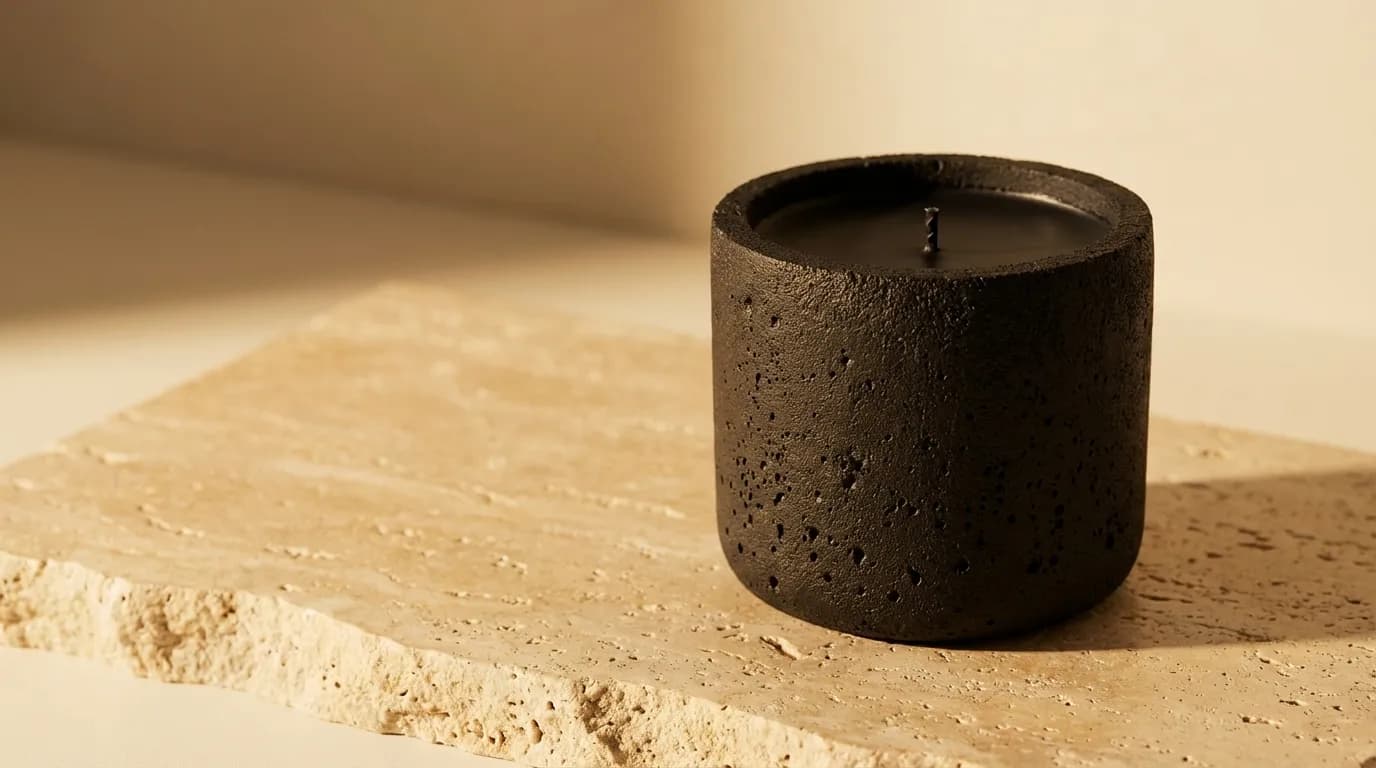
The word "luxury" appears on so many candles now that it has nearly lost its meaning. A candle in a glass jar with a paper label and a $12 price tag calls itself luxury. A candle in a hand-poured concrete vessel with a $78 price tag calls itself the same thing. The word has become wallpaper. It covers everything and distinguishes nothing.
But real distinctions exist. Here is how to read them.
Start with the Wax
The single fastest way to separate a premium candle from a dressed-up commodity is to ask what it is made of. If the wax is unnamed entirely, or if paraffin is the whole story, you are probably looking at a product that invested more in its label than its contents.
Soy, coconut, beeswax, and thoughtful wax blends are the foundations of genuinely quality candles. Each material has different burn characteristics and scent profiles. Soy burns cool and slow. Coconut burns clean with excellent scent throw. Beeswax carries a subtle natural honey aroma. A well-formulated blend can combine the strengths of more than one.
What you want to avoid is silence. A brand that is proud of its wax will tell you what is in it. The exact ratio of a proprietary blend may stay private, the same way a perfumer protects a fragrance formula, but the foundation and purpose of the blend should be clear.
Evaluate the Fragrance
This is where luxury candles earn or forfeit their premium. Fragrance in candles comes from either essential oils, fragrance oils, or a blend of both. Essential oils are plant-derived and typically more expensive. Fragrance oils are synthetic formulations that can replicate scents impossible to extract naturally.
Neither is inherently better. Some of the world's most respected perfumers work with synthetic aroma molecules. The quality distinction is not between natural and synthetic. It is between well-formulated and cheap.
A quality fragrance has depth. It opens with one set of notes, settles into another, and finishes somewhere unexpected. You should be able to smell it evolving over the course of a burn session. A cheap fragrance hits one note and holds it, flat and unchanging, until you blow out the flame.
The other critical marker: phthalates. Phthalate-free fragrance costs more to produce. Brands that use phthalate-free oils say so explicitly because it is a genuine selling point. Brands that do not use them stay silent. Silence, in this case, is informative.
The Vessel Is the Object
A truly luxury candle is not consumed. It is partially consumed. The wax burns down over weeks. The vessel remains for years. This means the vessel must work as a standalone design object, not just a container.
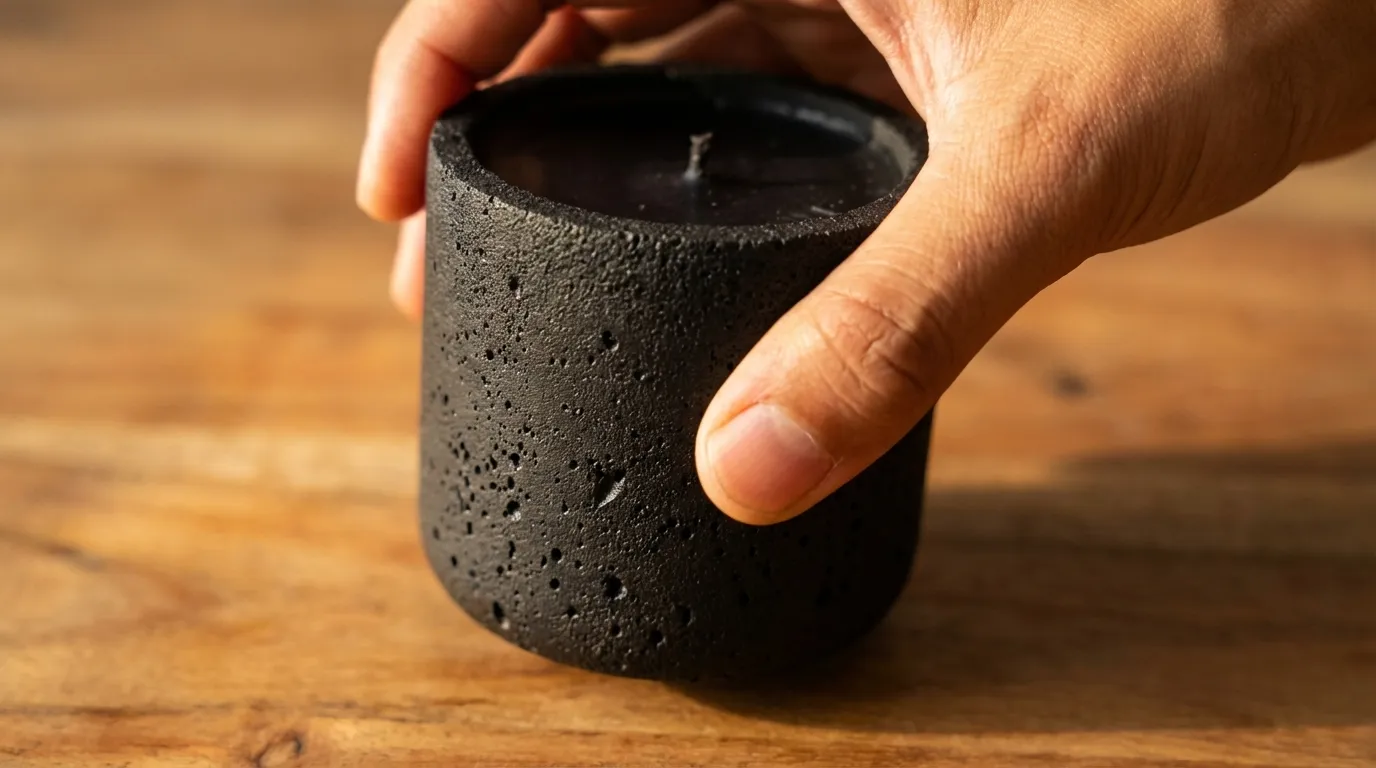
Evaluate it the way you would evaluate a piece of ceramics or a small sculpture. Does it have weight? Does it have presence? Would you display it empty on a shelf and feel good about it? Would a guest pick it up and turn it over in their hands?
Materials matter. Glass is fine but common. Ceramic is better if the glaze is interesting. Concrete is exceptional if it is solid and well-cast. Hand-blown glass is beautiful but fragile.
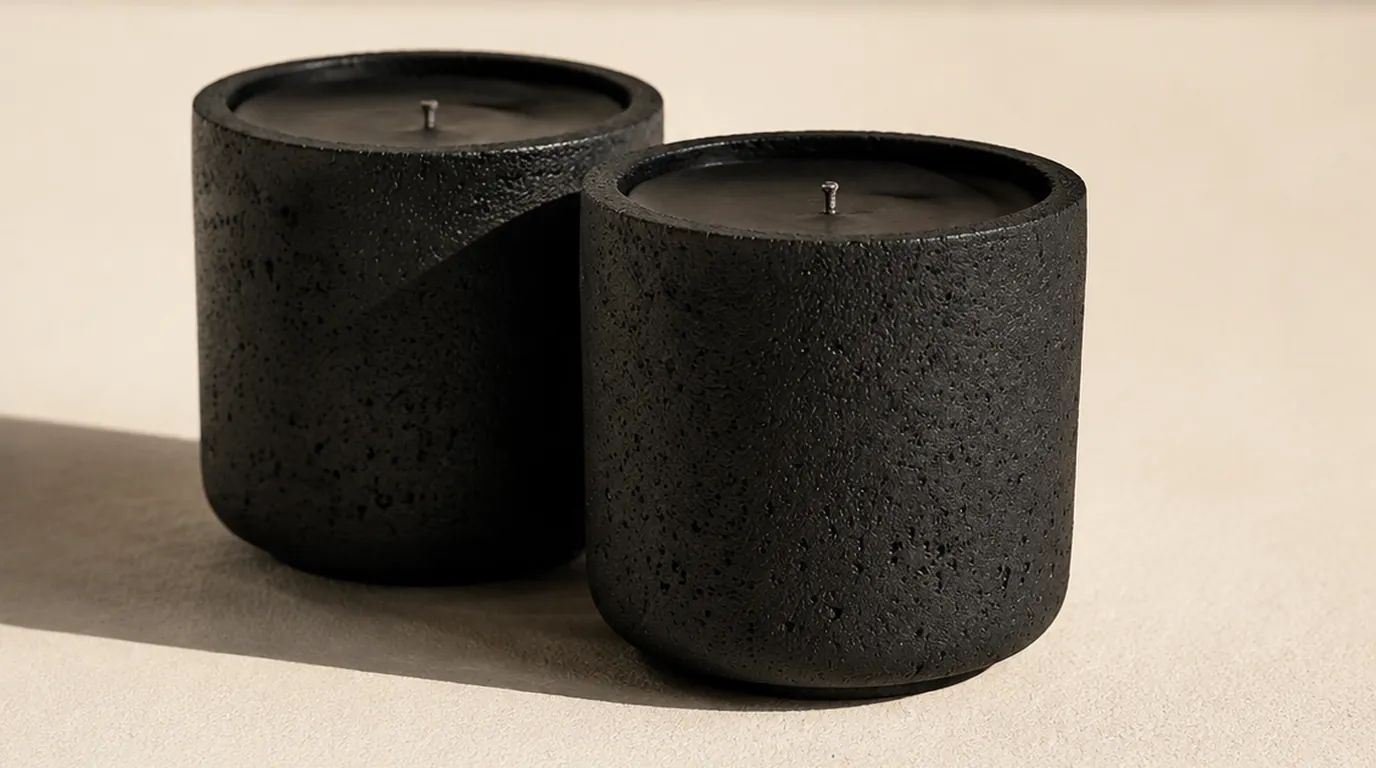
The proportion of the vessel matters too. A squat vessel on a narrow shelf looks awkward. A tall, slender vessel on a wide table looks lost. The best candle for your space is the one whose proportions converse with its surroundings.
Applied to 01 Andromeda: a hand-cast concrete vessel, 6.7 oz of black soy-blend wax, about a forty hour burn, and a vessel intended to be kept afterwards. Why that material was chosen over glass or ceramic is explained in concrete candle vessels.
Burn Time Per Dollar
Burn time is the most honest measure of value in a luxury candle. A $60 candle that burns for 60 hours costs a dollar per hour of use. A $30 candle that burns for 15 hours costs two dollars per hour.
This math reveals something the candle market does not advertise: many expensive candles are poor value, and some moderately priced candles are excellent value. Price alone tells you nothing. Price divided by burn hours tells you everything.
Soy candles generally deliver more burn time per ounce than paraffin because they burn at lower temperatures. A 6.7-ounce soy candle rated for 40 hours is performing at the high end of what the wax type allows. A 6.7-ounce paraffin candle claiming the same would be exaggerating.
Scent Throw
Scent throw refers to how effectively a candle distributes its fragrance into a room. There are two types: cold throw (the scent when the candle is unlit) and hot throw (the scent when burning).
A strong cold throw tells you the fragrance load is adequate and the wax is holding the oil well. Pick up an unlit candle and inhale. If you can barely detect the scent, the hot throw may also be underwhelming.
Hot throw is harder to evaluate in a store but obvious once you get the candle home. A well-made candle should gently scent a standard room, about 150 to 250 square feet, within thirty minutes of lighting. If you need to stand directly over the candle to smell anything, the scent throw is too weak. If the scent is overpowering from the moment you strike the match, it may be masking cheap wax with fragrance overload.
The sweet spot is a scent that you notice when you enter the room and then forget about while you are in it, only to notice it again when you return from another space. That cycle of awareness and backgrounding is the sign of a well-calibrated scent throw.
The Wick
Cotton wicks are the standard for quality candles. Wood wicks have become popular for their aesthetic, the gentle crackling sound, and their wide, flat flame. Both are fine choices.
What matters is that the wick is properly sized for the vessel. An oversized wick creates soot and burns through wax too quickly. An undersized wick causes tunneling. The right wick, in the right vessel, with the right wax, creates a clean, full melt pool within two hours and burns without visible smoke.
You cannot assess wick quality before buying, but you can assess it after the first burn. If the first session produces a full, edge-to-edge melt pool with a steady flame and no soot on the vessel walls, the candle was made by someone who tests their products.
Packaging and Presentation
Luxury candle packaging should do two things: protect the product and communicate the brand's values. Everything beyond that is cost added to your purchase price without adding to your experience.
Excessive packaging, multiple boxes, tissue paper, ribbon, printed cards, wax seals, is sometimes a sign that the brand is compensating for a product that cannot stand on its own. The best luxury candle packaging is minimal. A single box, well-designed, that you open once and recycle.
The candle should sell itself once it is out of the box. If it cannot, no amount of wrapping will fix that.
Buying one as a present changes the calculation, because the person unwrapping it did not pick the scent and cannot return it easily. That case is made separately in the art of gifting candles.
The Questions That Matter
Before buying a luxury candle, ask five questions. If the brand answers all five clearly, you are in good hands.
What wax is used, and what is the full composition?
Is the fragrance phthalate-free?
What type of wick is used?
What is the expected burn time?
What is the vessel made of, and is it designed for reuse?
Any brand that cannot or will not answer these questions has something to hide. The ones worth buying from welcome the conversation.
Lyra answers every question on the label. Soy-based wax blend, phthalate-free fragrance, cotton wick, 40-hour burn, concrete vessel. lyracalifornia.com.