
The moment a candle burns its last hour is, for most people, the moment the object becomes waste. The jar goes in the recycling bin, or more likely the trash, and the consumer buys a replacement. The cycle restarts. The landfill grows.
But there is a different ending available, one that depends entirely on the vessel the candle came in. If the vessel was designed only as a container, it has no second act. If it was designed as an object, the second act is where the real story begins.
The Afterlife Problem
The candle industry has a waste problem. Americans purchase roughly one billion candles per year. The vast majority come in glass jars that, despite being technically recyclable, are contaminated with residual wax, fragrance, and wick adhesive. Recycling facilities classify them as contaminated glass and route them to landfill.
Even the most environmentally conscious consumer struggles with candle jar disposal. Cleaning a jar for proper recycling requires melting out the remaining wax, scrubbing the interior, and removing the wick tab. Most people attempt this once, realize the effort involved, and simply throw the jar away for the rest of their candle-buying lives.
The problem is not the consumer's motivation. It is the design. Glass jars were never meant to be reused. They are containers, not objects. They have no identity beyond what they hold. Remove the wax and you are left with a generic cylinder with a label scar.
The Vessel Approach
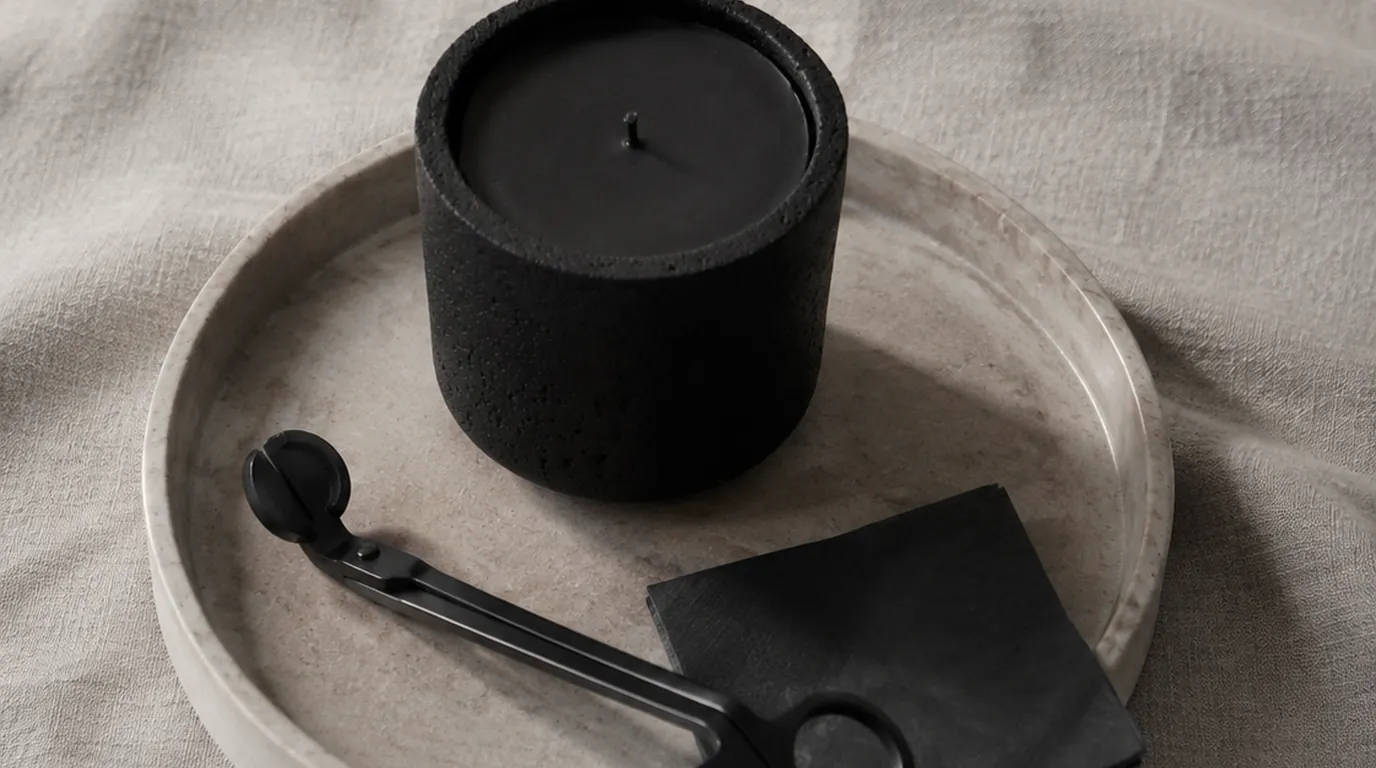
A well-designed candle vessel inverts this equation. Instead of asking what happens to the container after the candle, it asks: what was the container always meant to become?
This question, posed at the design stage, changes everything. The vessel's proportions are set for their visual merit when empty, not just their capacity when full. The material is chosen for its long-term aesthetic, not its short-term cost. The finish is sealed, smooth, and maintenance-free.
When the last of the wax burns down in a vessel like this, the consumer does not face a waste-disposal problem. They face a pleasant decision: what do I want to use this for?
Cleaning the Vessel
Before repurposing, the vessel needs to be cleaned. With concrete or ceramic, the process is simpler than with glass.
Place the vessel in the freezer for two to three hours. The cold contracts the wax, causing it to separate from the walls of the vessel and often pop out in a single piece. Any stubborn residue can be scraped gently with a wooden utensil or wiped out with a paper towel and warm water.
For the wick tab at the bottom, use a butter knife to pry it up gently. A small amount of adhesive may remain. Warm, soapy water and a soft cloth will take care of it.
The goal is a clean, empty vessel. With concrete, some faint discoloration from the wax may remain, especially with black wax. This is not damage. It is patina.
Second Lives
The number of ways to repurpose a quality candle vessel is limited only by the vessel's dimensions and the owner's imagination. Here are the uses that work best.
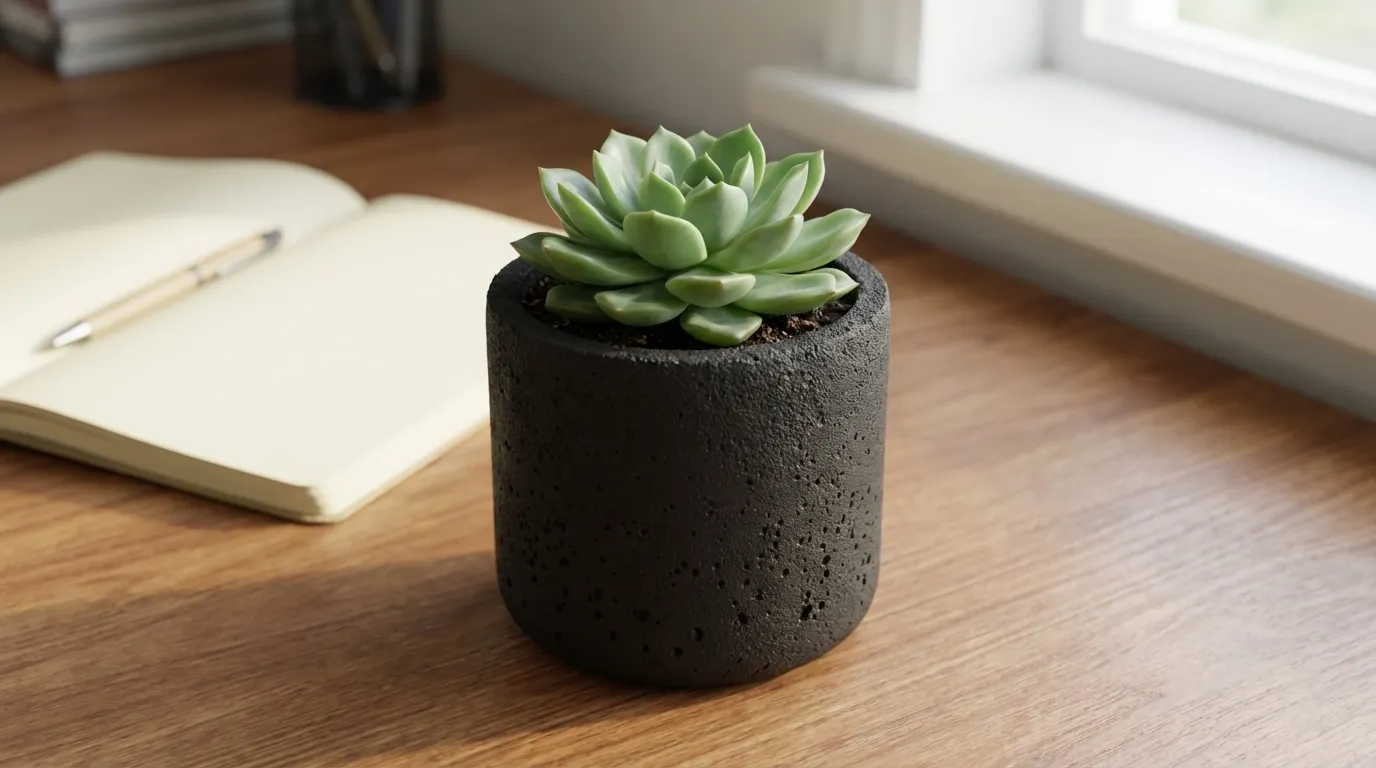
Small planter. This is the most popular second life for concrete candle vessels, and with good reason. The weight of concrete provides stability. The neutral color complements any plant. Small succulents, cacti, and air plants fit beautifully in standard candle-sized vessels. If you plant something that needs drainage, drill a small hole in the bottom with a masonry bit, or simply layer pebbles at the base.
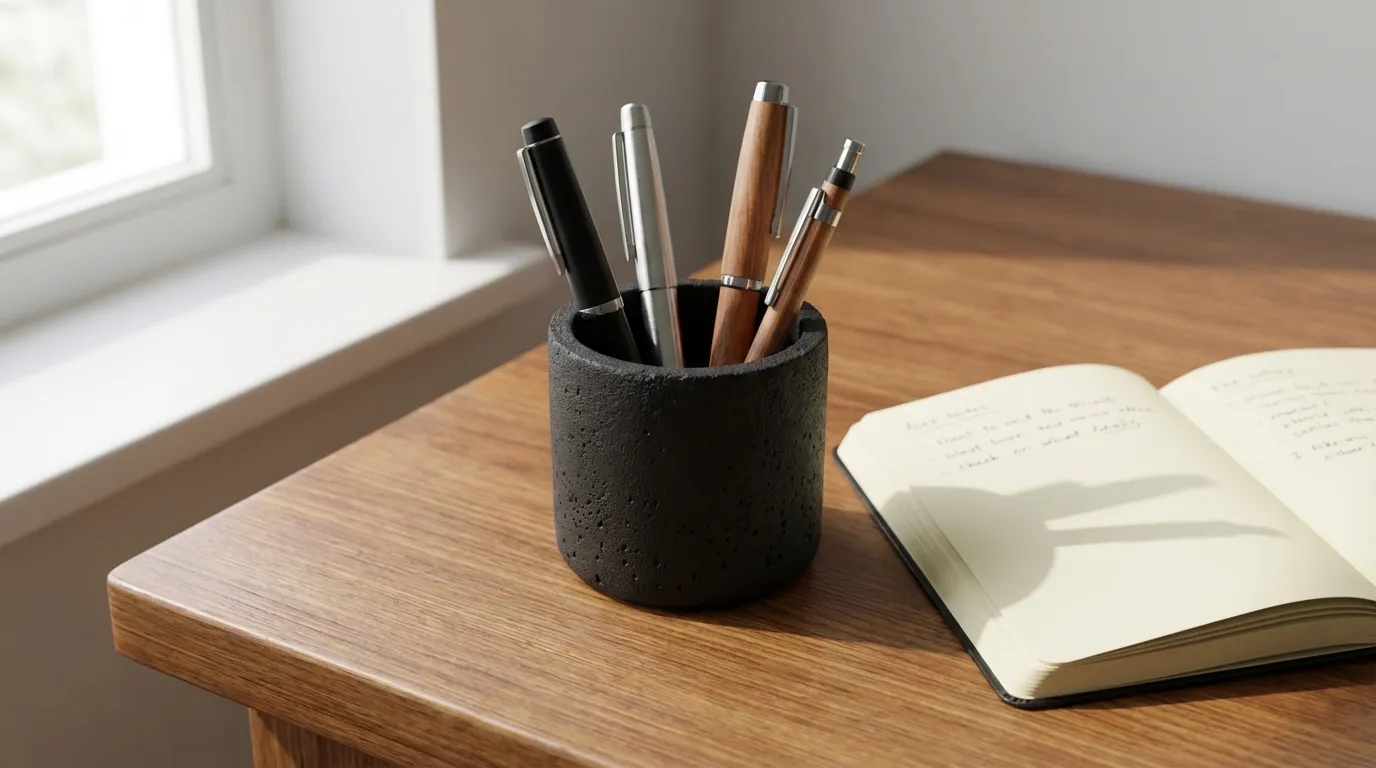
Desk organizer. Pens, pencils, scissors, brushes. A concrete vessel on a desk holds small tools with architectural gravity. It turns a functional need into a visual statement.
Bathroom catch-all. Cotton rounds, hair ties, small toiletries. A concrete vessel on a bathroom shelf elevates the mundane. It makes everyday objects look considered.
Kitchen container. Wooden spoons, chopsticks, small utensils. The vessel's weight prevents tipping, and its material resists heat better than plastic or thin ceramic alternatives.
Jewelry dish. Rings, earrings, small chains laid across the bottom of a concrete vessel. The matte surface prevents scratching, and the weight ensures the vessel stays where you put it.
Propagation station. Fill the vessel with water and root plant cuttings in it. The opaque walls hide the water and roots, creating a clean, minimal display while new plants develop.
Matchstick holder. Fill the vessel with long wooden matches. The black concrete against the warm wood tones of matchsticks creates a small composition that doubles as functional fire-starting storage.
Cleaning and burn instructions live on Lyra's care page. Why a concrete vessel survives this treatment when thin glass often does not is explained in concrete candle vessels.
The Sustainability Equation
Repurposing a candle vessel is not a grand environmental gesture. But it is a meaningful one, because it interrupts the most wasteful pattern in consumer behavior: the single-use cycle.
Every vessel that finds a second life is a jar that does not go to landfill. Over a lifetime of candle use, the difference adds up. A person who burns four candles a year and keeps every vessel accumulates forty objects over a decade. Forty objects that do not become waste. Forty objects that continue to serve a purpose in their home.
This only works if the vessel is worth keeping. A cheap glass jar will not be repurposed because it has no value beyond its original function. A solid concrete vessel will be repurposed because it has inherent value as an object. The material is the sustainability strategy. Good design is the mechanism.
Designing for the Afterlife
The best candle makers now design with the afterlife in mind. They select vessel materials that work empty. They proportion the vessel for visual balance without wax. They test the interior finish for easy cleaning. They consider what the object becomes, not just what it holds.
This is a fundamental shift in how a candle is conceived. It is no longer a consumable product. It is a designed object with a temporary fragrance component. The fragrance is the experience. The vessel is the artifact.
When you buy a candle made with this philosophy, you are not buying forty hours of scent. You are buying forty hours of scent plus an object for your home that may last decades. The value of the purchase extends far beyond the burn.
The Collection
Over time, if you are consistent about the candles you buy, a collection develops. Matching vessels on a shelf. A series of concrete cylinders in the same proportions, each one a record of a different scent, a different season, a different period of your life.
This is not hoarding. It is the natural accumulation of objects that were designed to persist. Each vessel carries its own small history. The one from the first apartment. The one from the winter you spent reading every evening. The one someone gave you, the one that introduced you to a scent you still love.
These are not candle jars. They are keepsakes. And the only difference between them and the billion jars that go to landfill each year is that someone, at the design stage, cared about what happened after the flame went out.
Lyra's solid concrete vessel is designed for its second life from day one. Clean it. Keep it. Let it become part of your home. lyracalifornia.com.