
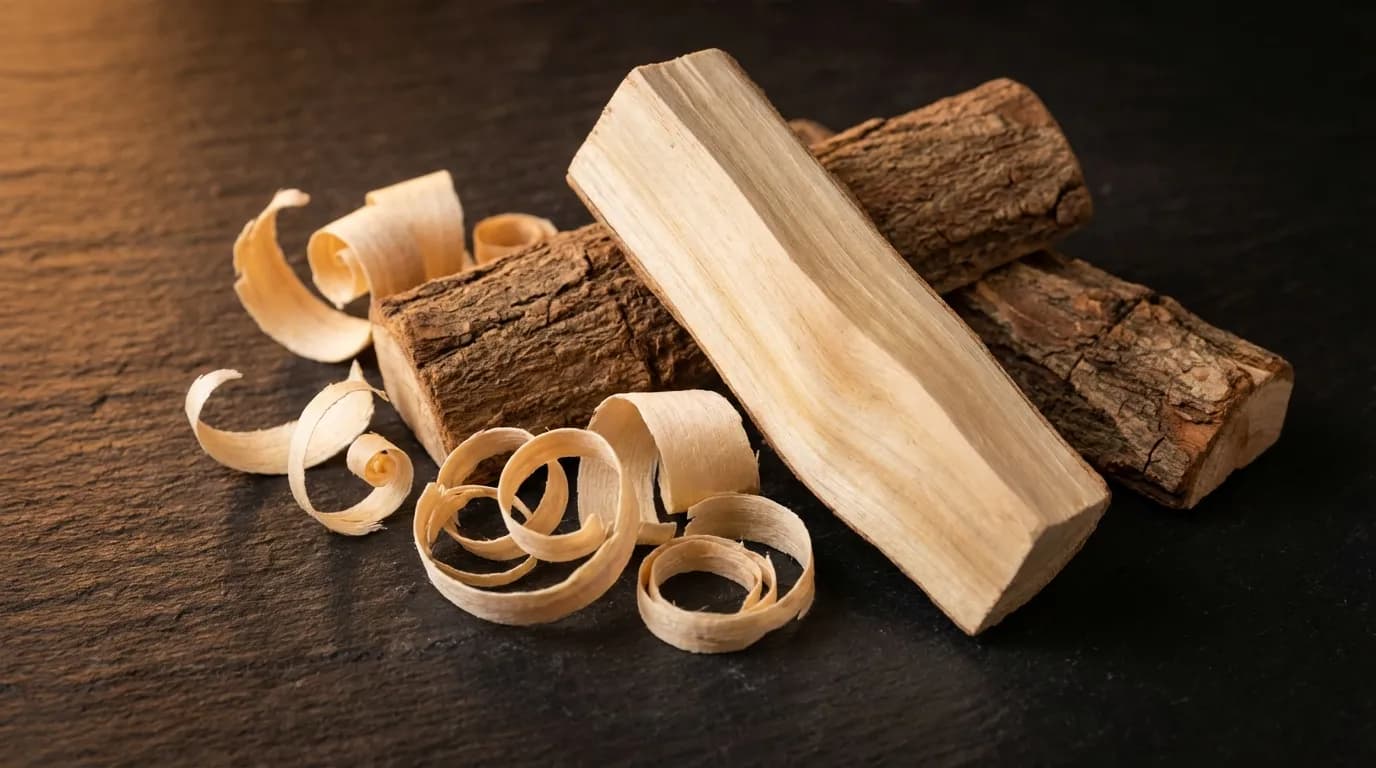
If you asked a perfumer to name the single most important base note in the history of fragrance, they would likely answer without hesitation. Sandalwood. Not because it is the rarest, though it is increasingly rare. Not because it is the most expensive, though the price has risen dramatically. Because it is the most versatile, the most ancient, and the most universally loved aromatic material on earth.
Sandalwood does not shout. It hums. It provides the warm, creamy, woody foundation that allows every other note in a composition to be its best self. It is, in fragrance terms, the most generous material there is.
A Four-Thousand-Year History
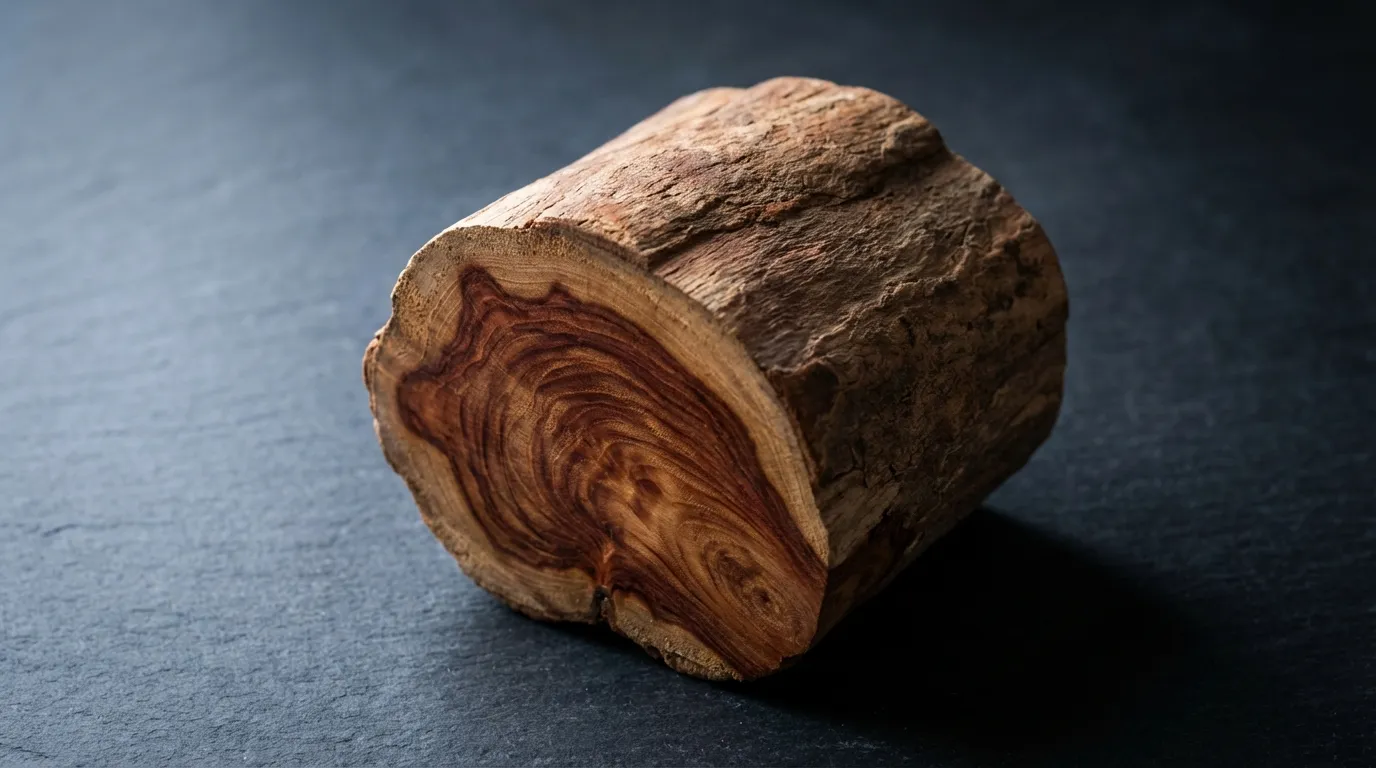
Sandalwood has been traded across civilizations for at least four millennia. Ancient Sanskrit texts reference it as chandana, a sacred material used in temple rituals, meditation practices, and royal courts. Hindu and Buddhist traditions burn sandalwood as an offering to the divine. The Egyptians imported it for embalming. The Chinese used it in medicine and incense.
By the time European traders reached India's Malabar Coast, sandalwood was already among the most valuable commodities on the subcontinent. The East India Company traded it alongside silk and spices. It became a fixture of European perfumery in the 18th century, where its warm, milky base note became the backbone of countless classic compositions.
No other fragrance material has been continuously valued by this many cultures for this many centuries. That longevity is not coincidence. It reflects something fundamental about sandalwood's relationship to the human nose.
The Scent Profile
Describing sandalwood's scent is an exercise in inadequacy, because it does not smell like a single thing. It smells like warmth itself.
The primary note is woody and creamy, almost buttery. There is a softness to it that no other wood offers. Cedar is dry and sharp. Pine is resinous and bright. Oud is animalic and challenging. Sandalwood is none of these things. It is round, smooth, and enveloping, with a sweetness that never crosses into saccharine.
Beneath the creaminess, there are undertones of milk, hay, and leather. Some describe a faint rose-like aspect, especially in the highest-grade Indian sandalwood oil. Others detect a barely perceptible vanilla quality that seems to emerge as the scent evolves on skin or in warm air.
Sandalwood is one of the few fragrance materials that becomes more beautiful as it dries down. It reveals its depth over hours, not minutes. In candle form, the heat activates its full complexity gradually, making it ideal for long evening burns where the scent can develop in real time.
Why It Works with Everything
Perfumers describe sandalwood as a "bridge note." It connects other materials that would not normally coexist harmoniously. A bright citrus top note and a heavy amber base can feel disjointed. Add sandalwood to the middle and the composition suddenly coheres. The warmth mediates between the brightness and the depth.
This mediating quality is why sandalwood appears in an astonishing percentage of fine fragrances. It is in Santal 33 and Bois de Santal, obviously. But it is also in fragrances where you would not expect it, hidden in the base as a structural element, never the star but always holding the stage together.
In candle making, sandalwood serves a similar function. Blended with black pepper, it amplifies the spice without competing with it. Paired with smoke, it rounds the sharp edges. Combined with jasmine, it grounds the floral sweetness and prevents it from becoming cloying.
The Scarcity Problem
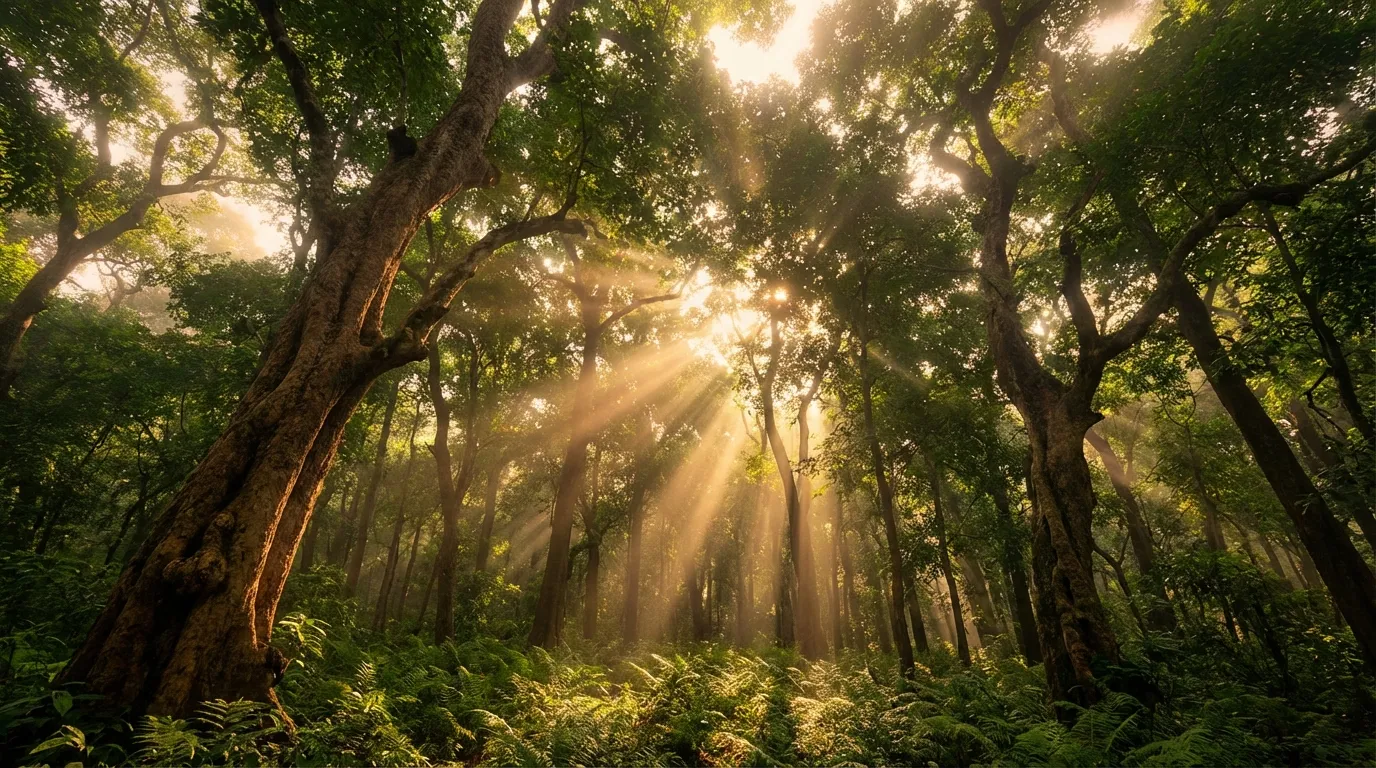
Indian sandalwood, Santalum album, has been the gold standard for centuries. It grows primarily in the forests of Karnataka and Tamil Nadu, takes 30 to 60 years to mature enough for oil extraction, and has been so heavily harvested that the Indian government now controls its trade.
The trees are endangered. Illegal poaching remains a serious problem. The price of genuine Indian sandalwood oil has risen tenfold in two decades, making it one of the most expensive natural fragrance materials on the planet.
Australian sandalwood, Santalum spicatum, has emerged as a sustainable alternative. It is plantation-grown, responsibly harvested, and produces an oil that is slightly drier and more transparent than the Indian variety. Most modern fragrance and candle formulations now use Australian sandalwood, either as the primary source or blended with small amounts of the Indian oil.
Synthetic sandalwood molecules exist and are widely used in mass-market products. The best of them, like Javanol and Polysantol, capture aspects of sandalwood's character but cannot replicate the full breadth of the natural oil. They are approximations. Good ones, sometimes. But approximations nonetheless.
Sandalwood in the Evening
If sandalwood has an ideal context, it is the evening. Its warmth deepens in low light. Its creaminess intensifies when the day's stimulation has subsided and the senses become more receptive to subtlety.
There is a reason that meditation practices have favored sandalwood for millennia. The scent promotes a state of alert calm, a focused stillness that is neither drowsy nor agitated. In a candle, this quality translates to a room that feels settled, collected, at ease.
It pairs well with the activities of evening. Reading. Conversation. Cooking a slow meal. The fragrance does not compete with these activities. It underlays them, providing an olfactory backdrop that enhances without intruding.
Sandalwood also holds up across a long dinner, where a sharper scent would wear out its welcome by the second course. On running candles through an evening with guests, see hosting with candles.
Choosing a Sandalwood Candle
A candle labeled "sandalwood" can contain anything from genuine Australian sandalwood oil to a synthetic molecule mixed with vanilla and musk. The quality range is enormous.
The markers of a good sandalwood candle: the scent should be warm but not sweet. Creamy but not heavy. You should detect woodiness, not perfume. The fragrance should develop over the course of a burn, growing richer and more complex as the wax heats, not flattening into a one-note drone.
If the candle smells strongly of sandalwood the moment you remove the lid, before any wax has melted, the scent is likely synthetic and heavily loaded. Real sandalwood whispers. It requires warmth to open. The cold throw should be present but gentle, like hearing a conversation in the next room.
Sandalwood anchors the base of 01 Andromeda, beneath smoke and musk, with jasmine and amber above it. For the note that gives the same composition its lift, see black pepper in fragrance.
The Patient Note
In a culture that values speed, impact, and immediate gratification, sandalwood is an outlier. It takes decades to grow. It takes hours to fully reveal itself in a room. It takes multiple encounters to appreciate its depth.
But the people who love sandalwood love it for exactly this patience. It rewards the person who sits with it. Who lights the candle and stays. Who notices the way the scent at the end of the evening is different from the scent at the beginning.
Sandalwood asks nothing of you except time. And it gives back more than any louder, faster, more fashionable note ever could.
Lyra's 01 Andromeda carries sandalwood at its base, blended with smoke, amber, and black pepper. A slow, warm close to any evening. lyracalifornia.com.