
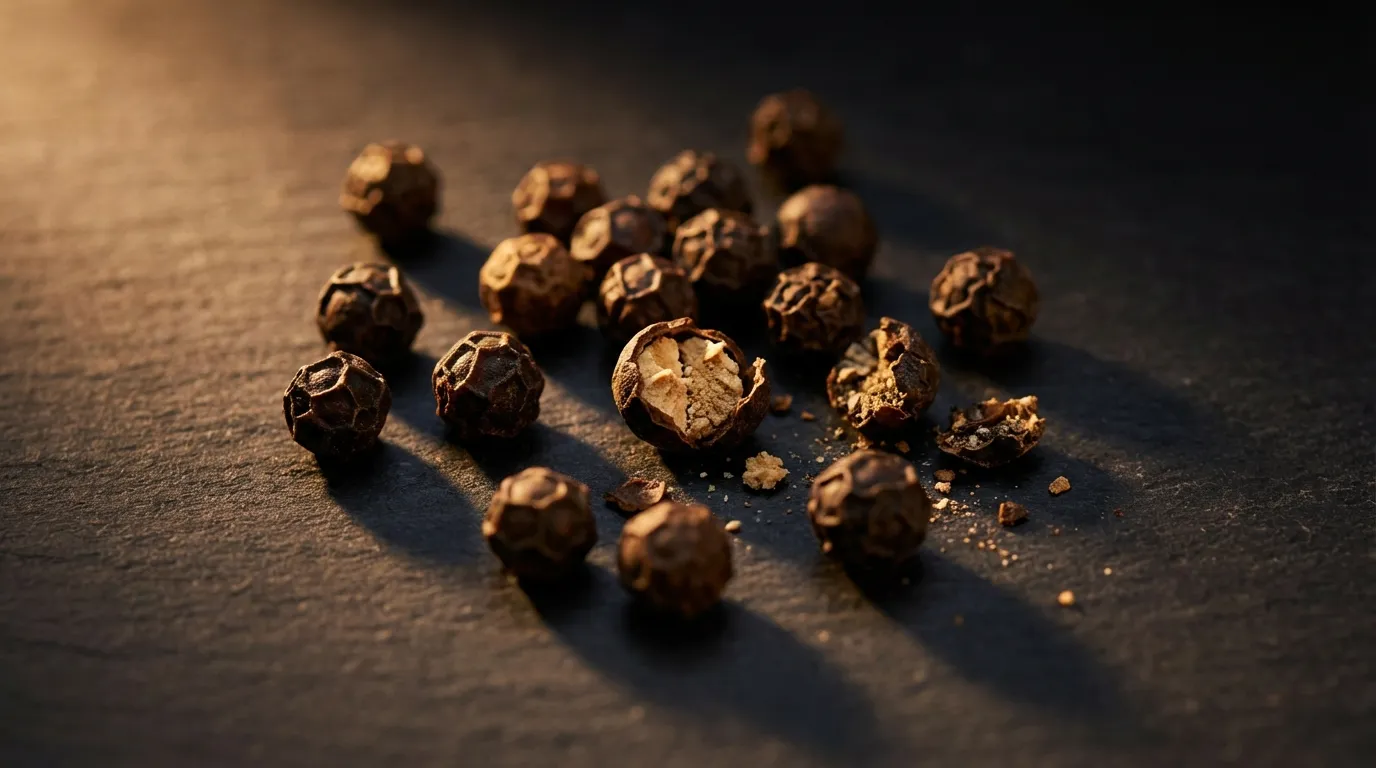
Open a jar of whole black peppercorns and hold it to your nose. Before the sneeze, before the heat, there is a flash of something bright and sharp and alive. It is not quite citrus. Not quite wood. It is a clean, dry warmth that cuts through the air like a knife through fabric.
That flash is what perfumers chase when they use black pepper in fragrance. Not the heat. Not the spice you taste in food. The spark. The opening salvo. The note that grabs your attention and then, with extraordinary grace, steps aside to let the rest of the composition speak.
The Spice Trade's Quiet Aristocrat
Black pepper, Piper nigrum, was once worth more than gold by weight. In medieval Europe, it was used as currency. Rents were paid in peppercorns. Dowries included it. The entire spice trade infrastructure, the sailing routes that connected Europe to India, was built substantially on the demand for this single berry.
In fragrance, its history is more recent but no less impactful. Perfumers began incorporating black pepper essential oil in the mid-20th century, initially as a novelty but quickly as a structural tool. They discovered that pepper's volatility, its rapid, assertive entrance and quick evaporation, made it an ideal top note for compositions that needed energy without sweetness.
Today, black pepper appears in some of the most respected fragrances in the world. It is the opening note that gives a first impression of confidence before retreating into the heart of the scent.
The Chemistry of Spark
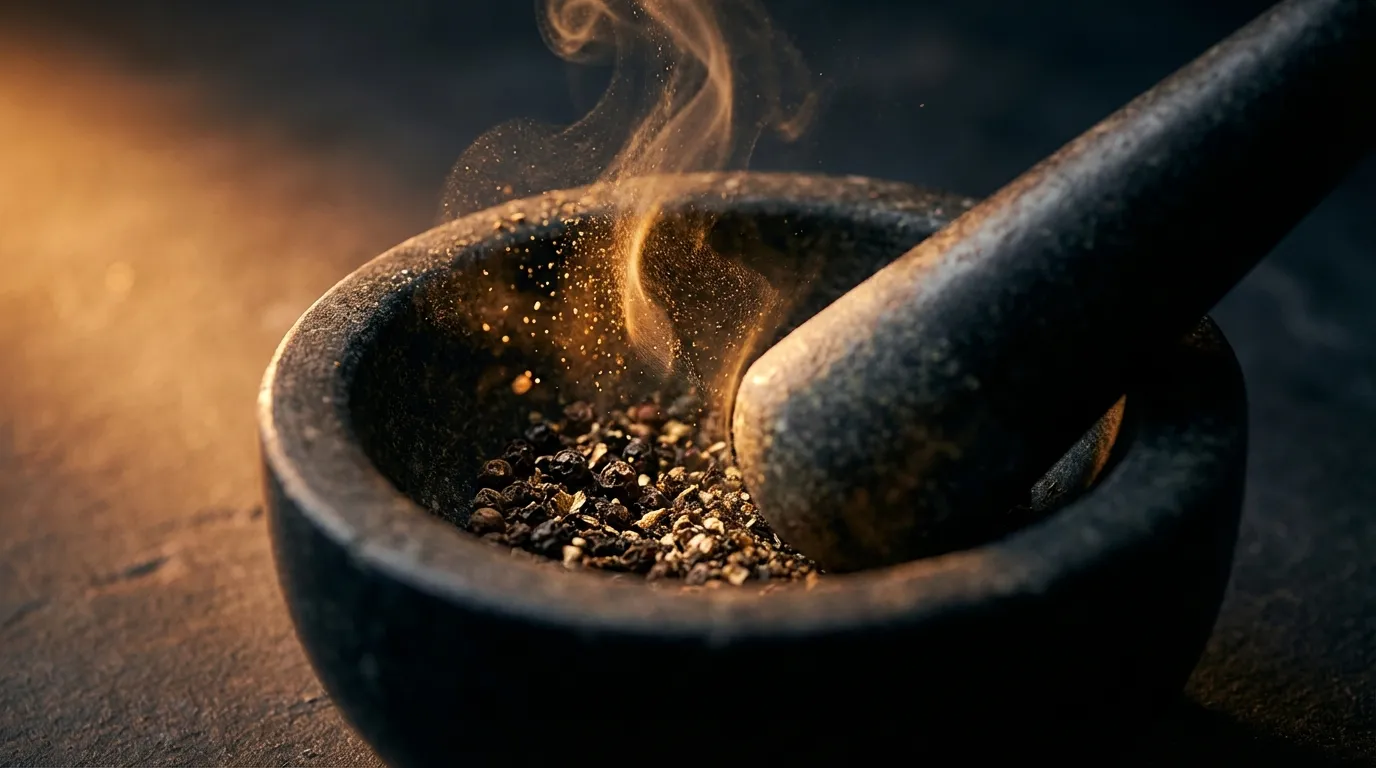
The molecule primarily responsible for black pepper's fragrance character is called rotundone. It is also found in grapes (where it produces the peppery quality in wines like Shiraz), in rosemary, oregano, and basil.
Rotundone is fascinating for a sensory reason: approximately 20 percent of the population cannot smell it. This means black pepper as a fragrance note registers differently across individuals. For most people, it reads as a warm, dry, slightly woody spice. For the rotundone-blind minority, the note may register only as a vague warmth.
Beyond rotundone, black pepper oil contains limonene (citrus), pinene (pine), and sabinene (woody-spicy), which together create the complex, multifaceted character that makes pepper more interesting than any single spice note.
What Pepper Does in a Composition
Perfumers use black pepper the way a chef uses acid in cooking: to brighten, to lift, to prevent heaviness. A fragrance that might otherwise settle into syrupy warmth gains vitality when pepper is added to the top.
It works by contrast. Against sweet notes like vanilla and tonka, pepper introduces dryness. Against heavy woods like oud and sandalwood, it introduces lightness. Against florals like jasmine and rose, it introduces an unexpected edge that makes the flowers feel modern rather than classical.
In candle making, pepper serves an additional function. It is one of the first notes you detect when a candle is lit, because it is highly volatile and disperses quickly in warm air. This means a candle with black pepper in its profile announces itself within the first minutes of burning, creating an immediate sensory impression that draws you into the room.
As the candle continues to burn and the wax reaches full melt temperature, the pepper recedes and the heart and base notes emerge. The experience has a narrative arc: pepper opens the door, and the warmer notes invite you to stay.
Pepper sits in the middle of 01 Andromeda with jasmine and amber, green citrus above it and sandalwood underneath. It is not the loudest thing in the composition, which is the point of using it. For how pepper behaves next to the other scents in a room, see fragrance layering at home.
Pepper's Pairing Partners
Amber and pepper is one of the great fragrance combinations. The warmth of amber and the sharpness of pepper create a push-pull dynamic that keeps both notes interesting. Neither dominates. Both evolve.
Sandalwood and pepper produces a creamy warmth interrupted by dry spice. The effect is sophisticated, like a well-tailored suit with an unexpected lining.
Smoke and pepper is primal. It recalls cooking fires, autumn bonfires, charcoal grills at dusk. The combination triggers deeply embedded comfort associations while maintaining enough edge to feel contemporary.
Citrus and pepper is energizing without being aggressive. The brightness of bergamot or grapefruit and the spark of pepper create a top note combination that is almost universally appealing. Many modern unisex fragrances are built on this foundation.
Jasmine and pepper is the pairing that surprises most people. The lush, sweet richness of jasmine gains an unexpected sophistication when pepper introduces a dry, woody counterpoint. The combination is the fragrance equivalent of sweet and savory in cooking.
Black Pepper in the Home
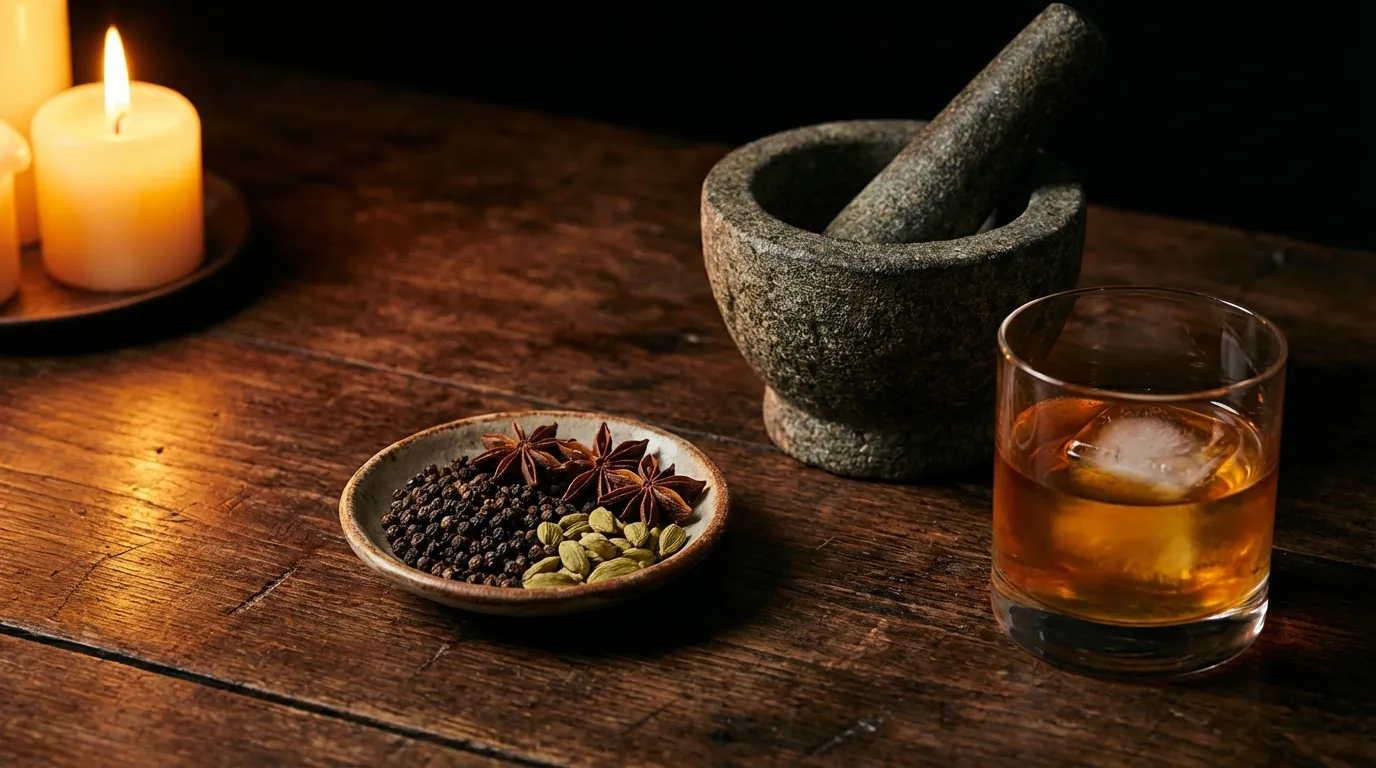
As a home fragrance note, black pepper works best as a component rather than a star. A candle labeled simply "black pepper" would be intense, one-dimensional, and likely irritating after thirty minutes. But a candle that uses pepper as an opening note within a complex blend creates an experience with energy and movement.
The ideal role for pepper in a home candle is transitional. It greets you when you enter the room. It wakes up your senses. And then, having done its job, it fades into the background as deeper, warmer notes take over.
This is why pepper works so well in candles designed for the evening transition, the hours between activity and rest. The pepper catches you at the door, still carrying the momentum of the day. The sandalwood, amber, and smoke that follow guide you into stillness.
Pepper reads differently after dark, when the sharp edge of it settles and the warmer notes underneath come forward. Building an evening around that is covered in creating a night routine with scent.
Seasonal Versatility
Unlike many fragrance notes that skew seasonal, black pepper works year-round. In winter, its warmth amplifies cozy, resinous base notes. In summer, its dryness keeps warm fragrances from feeling heavy in humid air.
This versatility makes pepper-forward candles particularly good investments for people who want a single, year-round home fragrance. You do not need to retire a pepper-and-sandalwood candle when the weather changes. It adapts, reading as invigorating in warm months and warming in cool ones.
The Note You Did Not Know You Loved
Most people, when asked about their fragrance preferences, do not mention black pepper. They say vanilla, sandalwood, lavender, or rose. But when presented with two versions of the same fragrance, one with pepper and one without, they almost always prefer the version with pepper.
They cannot always identify what they are responding to. They describe it as "more interesting" or "more alive" or "there is something I can't name." That unnamed quality is pepper doing its work: invisible, essential, the spark that makes everything around it better.
01 Andromeda opens with citrus and black pepper before settling into jasmine, amber, smoke, and sandalwood. It is the spark that starts the evening. lyracalifornia.com.